

Transition to a Smaller Global Economy
The economy has outgrown the planet and, despite efforts to make it “green”, the need for endless economic growth erases potential impact reductions on a global scale. Furthermore, the structure of economic growth concentrates wealth among those who already produce and consume at unsustainable levels. This pattern of conflicting priorities is supported by narratives of sustainability that focus intensely on impact-reduction at localized scales and which understand inequality as solely a problem of under-consumption. We are trained to “think globally, act locally” and meanwhile the economy, and its wealth-concentrating effects, act globally. Degrowth, a just and intentional downscaling of the global economy, offers a critical update to this logic, aligning it with the characteristics of true and lasting sustainability.
In this brief, we describe the typical “sustainability formula” by exploring three of its defining characteristics: what, where, and who. We show how the current definition of sustainability can be updated to focus on global ecology and wealth inequality, pointing to the necessity of reversing society’s commitment to endless economic growth. Under the banners of post-growth and degrowth, there is a significant discourse emerging about how to enact intentional downscaling and how to thrive together within a smaller economy.
Treating sustainability’s what, where, and who with deep concern can help build the kind of shared understanding required to enable a challenge to endless growth to emerge in every sector, from global finance and international diplomacy to research laboratories and community gardens. Finally, we emphasize that downscaling is for some, but moving away from the commitment to endless growth will require collaboration across global society.
Challenge to Growth Series
Transition to a Smaller Global Economy is the 3rd volume in our Challenge to Growth (C2G) series of briefs. Through this series, we provide summaries of current thinking and relevant data concerning limits to global economic growth. We point to opportunities for ushering in a more just and ecological economy, one that seeks appropriate growth in some areas, but which is smaller at a global scale. The C2G briefs are open access, with printable versions and graphics downloadable from our website. They are also filled with citations, so that you can dive deeper into the great variety of literature that challenges endless economic growth.
For more C2G content, check out:
Introduction
The word “sustainability” has come to mean many things. In general, it communicates a dual sense of environmental and social responsibility: in order to sustain life as we know it, we’ll have to take care of the natural world and secure lasting cooperation and coexistence among humans. Such a lofty goal leaves plenty of room for ideation and innovation, and thus a plurality of frameworks has gained traction since the term first entered popular discourse.
In this brief, we present a critique that applies across this plurality: the prevailing sustainability formula creates a false understanding that endless economic growth can be environmentally benign and socially beneficial. We break down this formula into three components – what, where, and who – which each contribute to defining the boundaries of sustainability thought and action. By updating these definitions to fit with ecological, economic, and social reality, the path to true sustainability becomes clear. The just transition that so many are seeking will need to be toward a smaller global economy. We can break from our learned commitment to endless economic growth, intentionally downscaling so that beneficial solutions gain real traction over damaging ones.
Though the degrowth movement is already developing ideas for how just and intentional downscaling may be pursued, it will need a far greater diversity of minds to get working on the problem of endless growth. By updating widely shared logic, we could prompt a larger movement that builds on the well-meaning work of environmental and social advocates everywhere. What follows is a proposal for reformulating the what, where, and who of sustainability, aimed at catalyzing a new wave of action toward a just and ecological future.
The sustainability formula
In defining the sustainability formula, we draw on our team’s significant experience and involvement in efforts that use “sustainability” as a banner word: local advocacy for recycling and composting; deployment of off-grid solar power; cultivation of community gardens, farmers markets, and cooperative living; university campus organizing; and corporate reporting of carbon emissions and environmental performance. Even across this diversity of spaces, a common formula helps keep the global economy out of view.
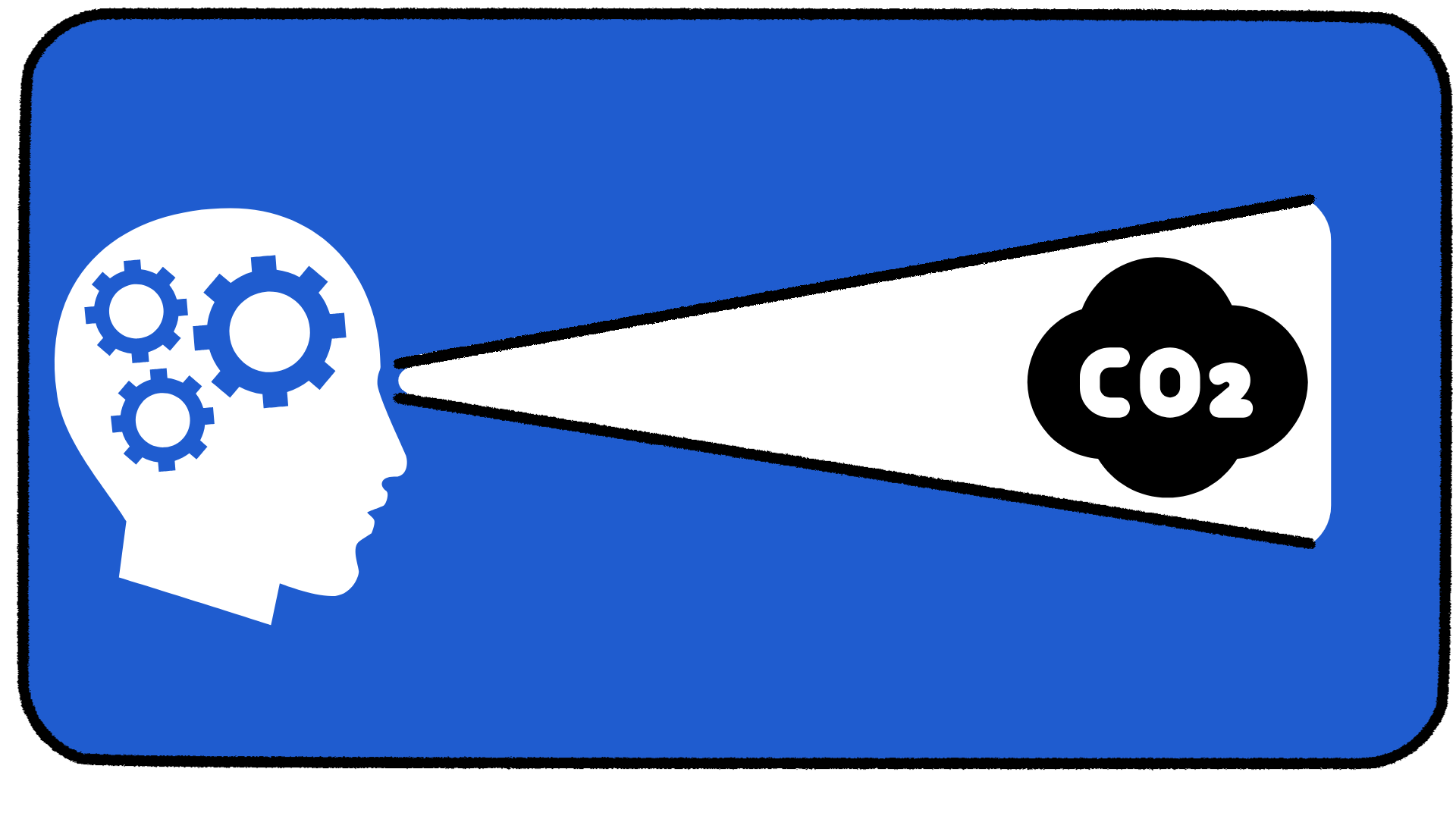
What problem does sustainability address? The formula focuses on single environmental indicators, with the discourse dominated by energy-related carbon emissions, a phenomenon called carbon tunnel vision [1]. From this view, all non-fossil-fuel technologies are assumed to scale widely and rapidly without environmental disruption. But the idea that low-carbon technologies are clean, green, or zero-impact is materially false. They require mineral extraction, landscape alteration, and management of emissions and waste products throughout their supply chains.
A singular focus on climate distracts from the many other aspects of ecology threatened along the way including biodiversity, nutrient cycling, and freshwater availability [2]. As a more general rule, the sustainability formula narrows the solution space down to specific cases where an impact-intensive process can be replaced with a more efficient one. The answer to climate change, or any single-indicator issue, then becomes a technology-update problem, pointing to more efficient forms of production and consumption as the answer. The reality of how and where the economy responds to efficiency leads to our next formula component.

Where are impacts generated and experienced? In our globally-linked economy, savings in one locale or sector are easily redeployed to serve growth elsewhere [3]. That means impact- reduction efforts, from the smallest community to national scale, often end up shifting burdens to locations out of view. This phenomenon is partially why global carbon emissions continue to climb, even as some industrialized countries have bent their emissions curve downward [4]. Fossil energy resources are traded and transported at a planetary scale. Ignoring this dynamic is similar to the old illusion that our trash gets thrown to a mysterious, mythical place called “away.” We live in a globalized economy with resources and impacts moving at that scale. We must therefore strive for a sustainability formula that knows no elsewhere, that truly “thinks globally” and keeps the full range of impacts, actions, and communities in mind. This points to another aspect of the formula in need of repair.
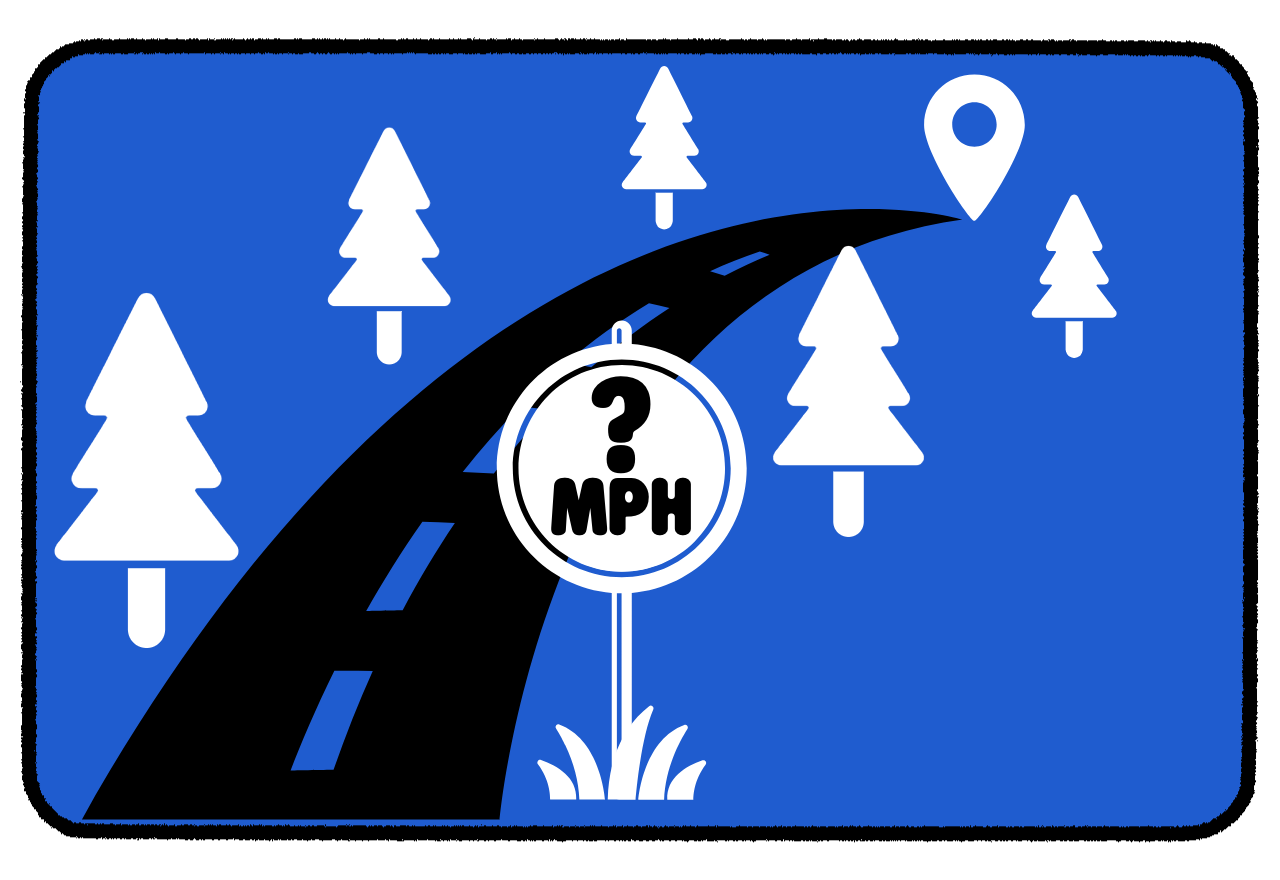
Who does sustainability action serve or confront? The sustainability narrative often shields the upper end of the economic spectrum from view, focusing attention on the least-resourced rather than the over-consuming parts of society. In this way, growth always appears as progress. This framing also sidesteps the problem of extreme inequality, in favor of efficiency and techno-solutions introduced at the lower end of the economic spectrum. The issue of housing and affordability, popular with sustainability-minded audiences, illustrates this focus. We hear, for example, that “[the United States] has 4.5 million fewer homes than its people require” and that the solution is to build more climate-friendly, efficient, and therefore, affordable housing [5]. But that single statistic misses the full-spectrum reality of housing supply in the US. The fact could also be raised that there are 6.5 million people in the US who own second homes [6], not to mention multiples beyond that. Focusing only on the lowest standards of wellbeing is like trying to achieve road safety by requiring drivers to travel above a a minimum speed limit, without setting a maximum one. It ignores a different and equally important kind of danger created at the upper end of the economic spectrum.
In summary, we find that most approaches to sustainability apply the following formula to social and environmental issues: (1) frame the problem in terms of single environmental indicators, such as carbon emissions; (2) focus on cases, such as cities and companies, where impact reductions can be achieved within a tightly bounded system, disconnected from the whole; and (3) train attention on the lower end of the economic spectrum so that increasing production and consumption is inarguably beneficial (Figure 1).
It’s no wonder then that, even with decades of well-meaning work on reducing planetary-scale impacts and inequality, so few critical trends have been reversed. We are trained to “think globally, act locally” and meanwhile the economy – and its effects – act globally. Stuck in the loop of acting within locally-defined boundaries and inherited definitions of what is green, we end up with plenty of additions of economic activity, but not transitions of economic practice away from extraction and ecological destruction. A genuine transition requires us to name and act upon the macroeconomic phenomenon of endless economic growth.
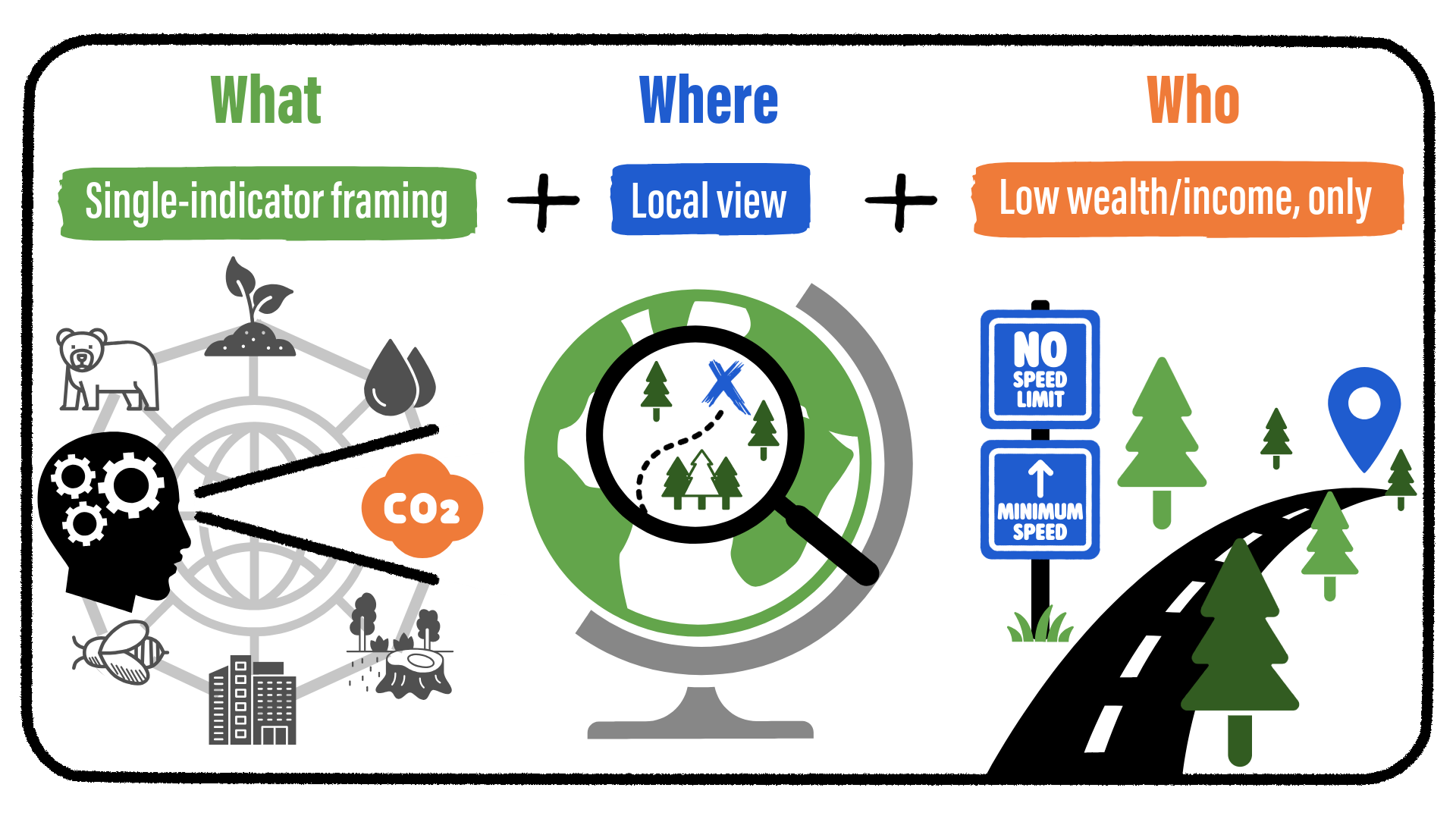
Figure 1: An outdated sustainability formula, for endless economic growth
A challenge to growth
One may think of the sustainability formula as a product of past successes in pollution management. Together, environmental advocacy and policy campaigns cleaned up local air, water, and land by forcing industries to implement technological updates. Our cars were equipped with catalytic converters that reduce smog, lead was removed from gasoline, sulfur was scrubbed out of industrial flue gasses, and our sewage treatment plants now return clean water to rivers and lakes. All of that was done without interrupting the general trajectory of economic growth.
The logic that evolved from such successes, however, has gone stale. As evidence and attention have mounted around global-scale environmental crises, most of us have not gone back to empathize with and re-define the problem of sustainability before ideating on solutions. This leaves us in an outdated problem-solving loop, where concepts like “clean tech”, “green buildings”, and “smart cities” only apply at the scale of individual businesses and municipalities. Within this loop, the deeply rooted assumption – that economic expansion is inherently and endlessly good – goes unchallenged.
To make the challenge to endless growth explicit, a new narrative of sustainability is emerging, advocating for degrowth: a just transition to a smaller global economy. Degrowth is a rethinking of sustainability and an antidote to its present-day shortcomings. It names the problem as one of whole ecology, macroeconomy, and the upper end of the socioeconomic spectrum, while making the full range of action, from local to global, available as grounds on which to enact change.

Degrowth is a just transition to a smaller global economy.
That’s why we aim to bring the problem of endless growth to general attention, so that a great variety of communities can help structure an effective transition away from growth dependency. This moment provides an opportunity to change directions; to turn onto a more exciting path of innovation within speed limits. But the turning is slow, and the path is still appearing. In confronting the questions of what, where, and who, we elucidate some of the signs that will show us the way to how.
What: The Whole Planet
The Earth is not a static pool of resources, but a living system. You might call it a phototroph – an organism that captures light energy to drive its metabolism. With our daily dose of sunlight, every process on Earth is powered, from weather changes to food production. Any Earth Science 101 textbook will explain the natural processes that constitute a functioning Earth, among them the water, carbon, nitrogen, and rock weathering cycles, the changing of seasons, and the ebb and flow of living creatures, all powered by the Sun.
Just as well, any Economics 101 textbook will tell you that economic value is created from resources. “A resource is anything that can be used to produce something else” [7]. We tend to interpret this term resource as a physical substance like oil, ores, timber, plants, and animals, but it can also be processes like flowing water, which we tap for its kinetic energy, or photosynthesis, which turns carbon and other nutrients into plant life. The climate is one huge natural process on which life, as we know it, depends. An ecological resource, then, is any substance or process that we convert into economic goods and services. And, in making the conversion from resource to economic activity, we also affect that resource’s ecological function of maintaining a stable Earth system (Table 1).
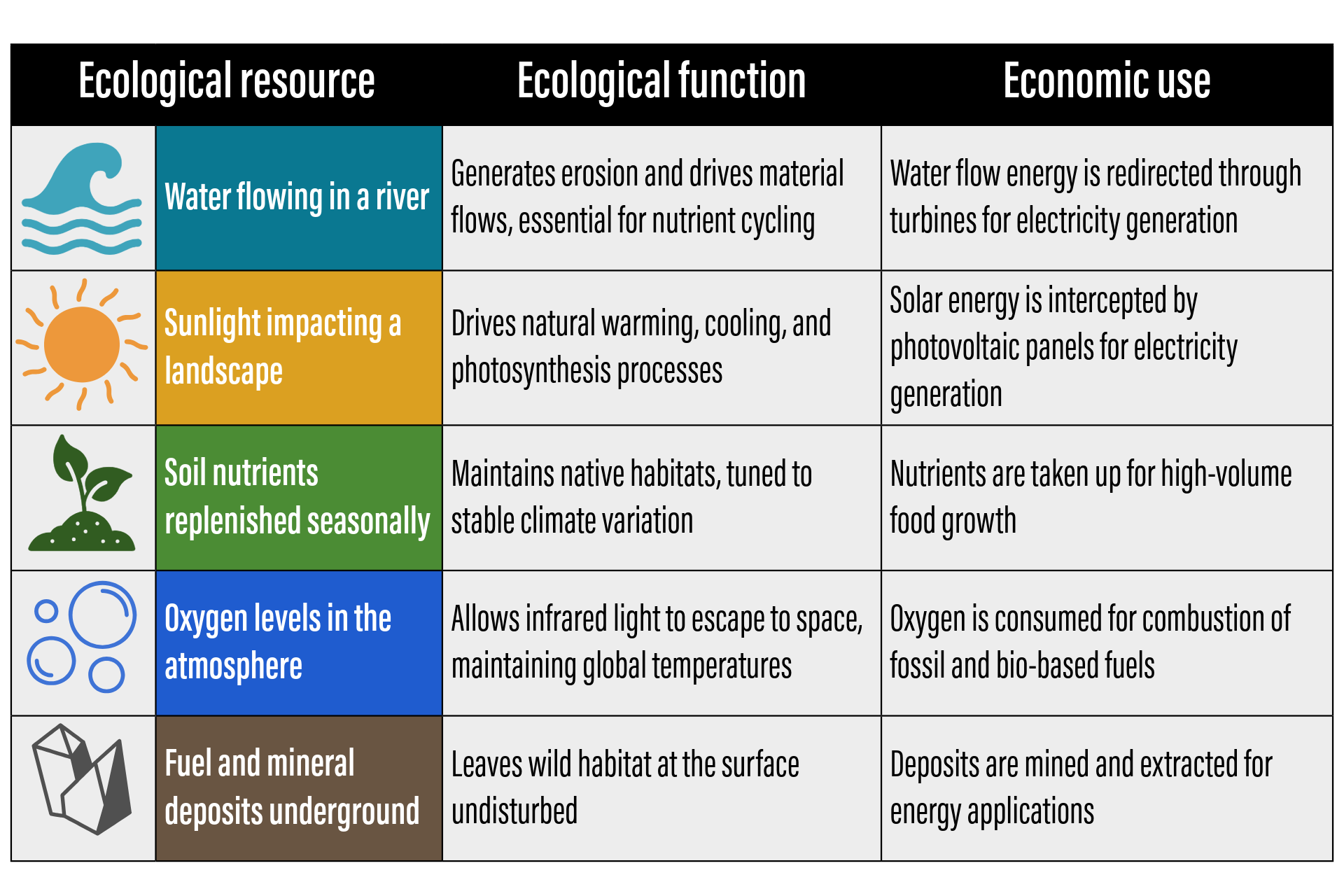
Table 1: Examples of ecological resources and economic uses
These examples are illustrative of the inextricable relationship between global ecology and economy. For more detail on the relationship between economic size and ecological sustainability, see Challenge to Growth Brief #1 Has the Economy Outgrown the Planet?
It is impossible to think of an economic output that does not require some ecological input. Activities as immaterial as having a thought, talking to friends, and doing a yoga pose all trace back to ecological resource demand: food and water energize your brain, built structures supply space for social interaction, and organic straw makes for an eco-friendly yoga mat. Every unit of economic value represents some quantity of ecological input. When we measure economic size using metrics such as Gross Domestic Product (GDP) – the total value of goods and services produced in an economy – we are also measuring a claim on some part of Earth’s natural functionality. The economy is ecology, and vice versa.
So, what is the underlying problem? It’s the endlessly-growing use of the Earth. This has been said many times in many ways, especially in the era since “sustainability” became a popular political concept. However, the root cause tends to be named as specific aspects of the economy: we are facing peak oil [8], or a population bomb [9], or the sixth extinction [10]. Even the famous Limits to Growth report, which warned that growth is putting global society in a state of ecological overshoot, divided growth into four factors: population, capital, materials, and energy [11].
It is not some subset of economic factors that have outgrown the planet; it’s the whole interconnected economy. And while the whole is outsized, it is also highly imbalanced. Just 10% of the global adult population (556 million individuals) holds 74% of economic wealth. And 0.01% of that group (56,000 adults) hold more wealth than the bottom 50% combined (2.8 billion adults) [12]. This is both a staggering level of inequality and, with the economy is ecology in mind, a dangerous concentration of power over global ecology, in the hands of a few. That danger has already arrived as both unmet needs for many around the world, and as overshoot of planetary boundaries. Sustainability must address the global asymmetries of power and agency right alongside the planetary imbalances, because the two are inherently interlinked.
Concentration of economic control and the mismanagement of ecological power are both symptoms of a commitment to endless growth, embedded in our economic system and adhered to by governments and organizations the world over. But where in such a globe-spanning system can we possibly intervene and make a difference?
Where: The Entire Economy
If we name the problem of unsustainability as spanning the entire globe and touching every aspect of ecology, then we risk communicating that the issue cannot be handled by everyday people living in community. The logic of environmental action thus tends to focus on smaller scales of control: neighborhood-level changes, company-scale decisions, and personal consumption choices. We are trained with mantras such as “think globally, act locally” and “live simply so that others may simply live.” This framing makes the how of taking action feel personal and tangible. If we know, for example, that biodiversity loss is a problem globally, then advocating to preserve local wildlife habitat should be a step in the right direction.
In empathizing with the problem of endless growth, however, we do need to zoom out, once again, to view what happens in response to well-meaning action at smaller scales. In our previous brief, What Happens to the Savings?, DGI documented several campaigns that have prompted significant localized action without yielding global impact reduction [3]. Our analysis shows that we are constantly losing out on resource savings, even those won in the name of planetary goals, because of ceaseless pressure to deliver economic growth. Responsible action in one part of the economy is meaningful for setting an example, but if we really care about the health status of the whole planet, we must pay attention to what happens across sectors and beyond political boundaries.
Because the economy follows a growth imperative, when we curb demand in one place, we sacrifice a bit of economic output that must be made up for elsewhere to support overall growth. Here are some of the key ways that our sub-economies are connected to “elsewhere”:
Local to Global: Commodities such as petroleum, natural gas, copper, corn, and coffee are traded on markets that shuffle supply and demand across the world [13]. When localized savings are achieved – through more efficient production methods or policy meant to reduce consumption – the global commodity market redistributes those savings elsewhere.
Personal to Commercial: Environmental concern may compel us to reduce energy use and material consumption in our daily lives, but commercial and industrial-scale entities take advantage of end-use savings to supply new business opportunities further upstream. Take paper (which comes from trees) as an example: printing paper demand has been drastically reduced, thanks to electronic communication, but the paper industry has made up the difference by producing ever more packaging [14].
Humans to Non-Humans: The materials that people do not consume directly can easily be shifted to other non-human consumers, namely animals and machines. That’s what happens to the growing excess of cereal crop supply here in the US – it is turned into livestock feed and biofuels [15]; our accompanying population of animals and equipment can always grow, even if the human population does not.
More Efficient to Bigger and Faster: What looks like more efficient technology is often both faster and larger scale. Transport by air is technically lower-carbon than transport by car, on a CO2 per person-mile basis. But airplanes enable much longer trips at higher speeds, prompting far greater travel distances overall [16]. Energy efficiency and carbon-intensity metrics can hide the impacts of growing demand by focusing on per-unit rather than whole-economy values.
One Product to Another: Chasing down alternative products, whack-a-mole style, is a familiar challenge for regulators of drugs, chemicals, and consumer products alike. Bans on single-use grocery bags and water bottles illustrate this difficulty when producers respond by making thicker versions, still made from plastic [17]. Product durability changes, avoiding the “single-use” label, but the total quantity of plastic used is not lowered. An ever-growing economy favors turning raw materials into some product or another, not leaving them alone.
One Sector to Another: Raw materials have many potential economic uses, so reducing demand in one sector does not bring a reduction in demand across the whole economy. Fossil fuels and cash crops provide great examples of this, but so do their inorganic counterparts – metals and minerals – as do natural-flow resources like water, wind, and sunlight.
One Ecosystem to Another: As ecological resources are used up or become difficult to reach, we don’t cut back on demand. Rather, we find some other ecosystem that can be tapped for alternatives. We see this especially in our hunt for drinkable water, increasingly pushing into salty seas and oceans [18] and for usable energy, tapping sensitive ecosystems to extract critical energy materials [19].
Economic connections are nearly infinite in their potential to sprout anew, like a forest canopy that constantly recruits new tree growth to fill gaps in the system. Thus, even if we get significant action at a local or sectoral scale, a lack of macroeconomic view means we’ll ignore the many pathways through which the savings are lost to growth (Figure 2).
So, where do we start? We use the question of “where” to shift our view of the economy beyond immediate premises. This does not mean we give up on acting out our values at whatever scale of action is available to us. Instead, we need to pair our hard-won local victories and well-meaning eco-initiatives with advocacy for a smaller global economy. Since no ecosystem on Earth is isolated from the whole, we must exercise equal concern for the small boundaries, within our control, and the largest possible boundary: our one shared planet.
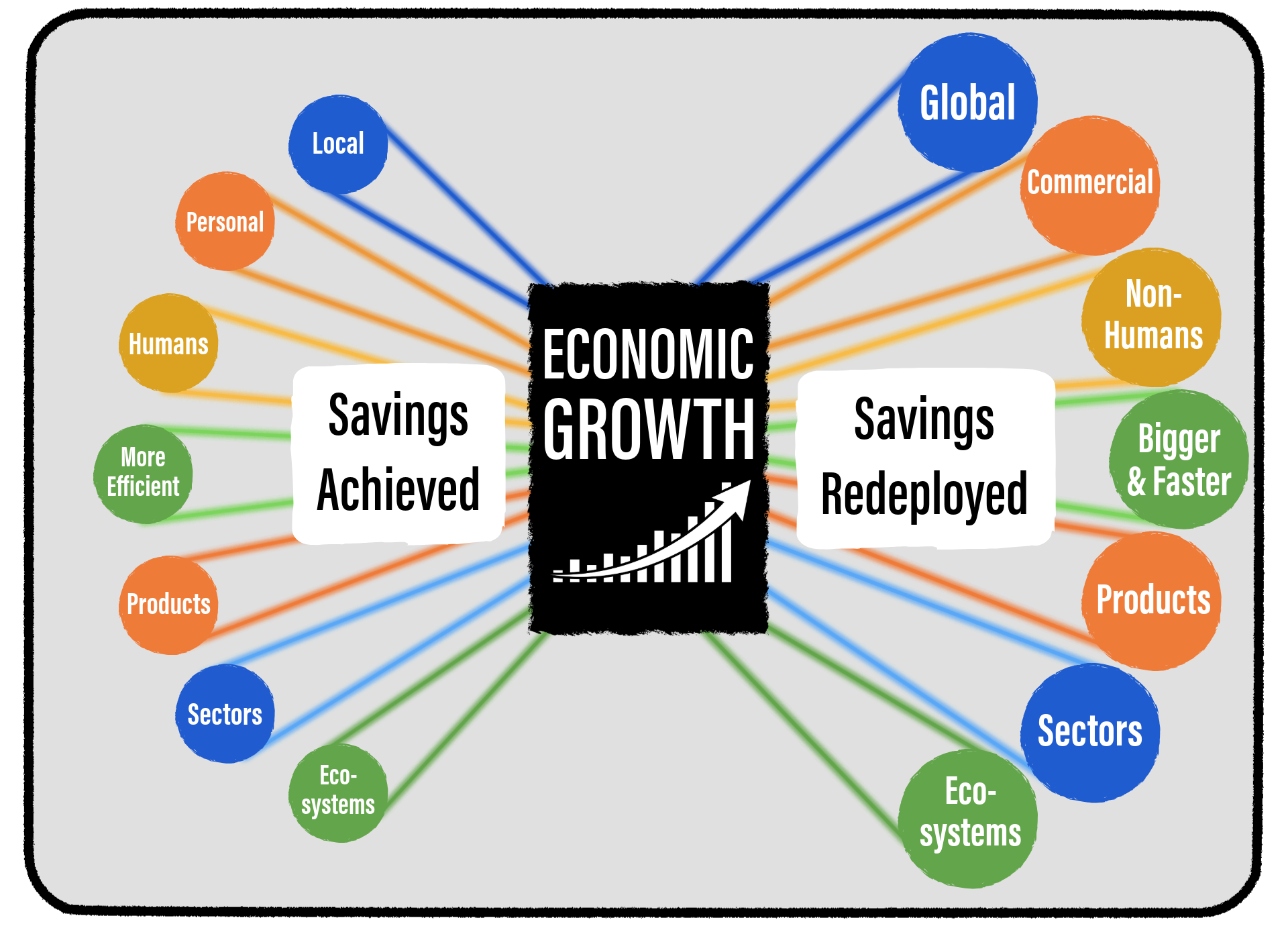
Figure 2: Savings redeployment pathways
This conceptual diagram depicts global linkages among factors of production and consumption. Through these links, savings in one part of the economy become a growth opportunity elsewhere, sometimes in very unpredictable ways. For more detail on this phenomenon, see Challenge to Growth Brief #2: What Happens to the Savings?
Who: The Wealthiest
With the one-planet boundary in mind, we turn to another question: who is to act, at a planetary scale, and who is to be affected? By focusing on localized cases, the sustainability formula often directs attention at individual consumption decisions, personal or corporate. Every action – from dietary choices to energy purchases and career paths to investment portfolios – can be scrutinized for its life cycle impacts. An entire field of corporate consulting has developed around measuring and managing environmental impacts through analysis of supply chains and operations. While this individual scale of action is important for cultivating ecological norms and standards, it can also obscure the question of who bears responsibility for the outsized and imbalanced character of the economy.
While all the attention is going to the technical details of consumption and production, and parameters of individual spending decisions, the global view is lost. Only people with the ability to drive a Tesla or divest from fossil fuels are included in such a view, and their eco-actions are seen as necessary rather than tightly linked to an endless cycle of expanding resource demand.
However, the global view is not lost in every conversation. Global GDP, the aggregate of everyone’s consumption activity, is the ultimate indicator of economic size and is central to political dialogue and economic headlines the world over. We can introduce this dialogue into the sustainability formula by thinking of GDP as an ecological indicator. Such a merger is logically and quantifiably justified.
As the global economy expands, so does our total claim on ecological resources. Figure 3 shows humanity’s ecological footprint rising in lockstep with global GDP. The global economy surpassed a footprint of one Earth in 1970 and has been running an ecological deficit ever since, manifesting as climate change, biodiversity loss, water stress, and other violations of planetary boundaries. It is clear that the only path back to living within a One-Earth footprint involves bending the global GDP trajectory downward.
So, who bears responsibility for doing this? Approaching this question by the numbers makes the answer fairly simple: those with outsized ecological footprints – i.e., those at the upper end of the economic spectrum, either in wealth or income.
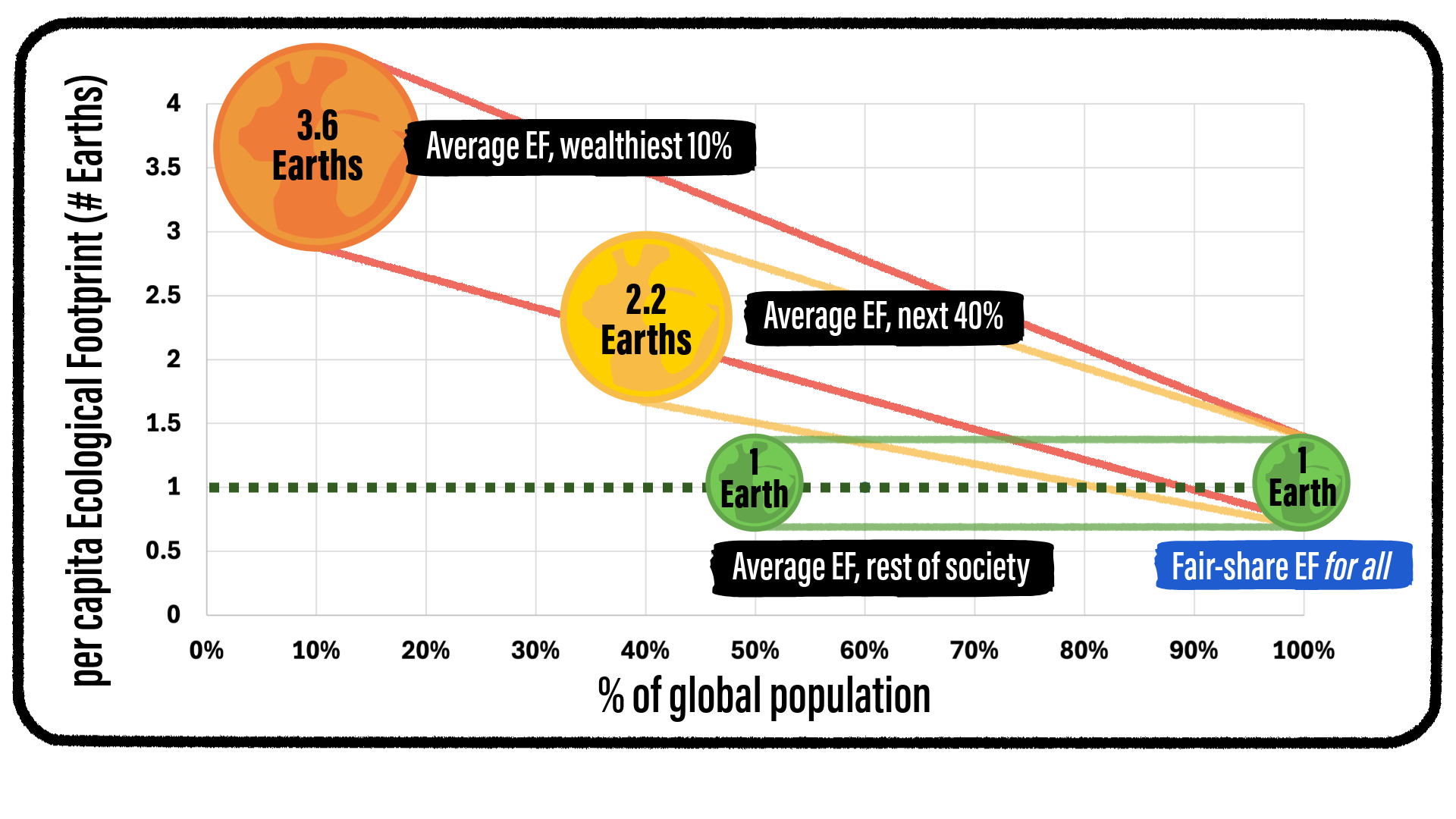
Figure 4: Global wealth classifications and their trajectories toward a fair-share One-Earth standard. Data combines national EF accounts [19] and national wealth data [25].
Wealth and EF: While there is economic stratification in every country, these summary statistics help illustrate how wealth and outsized ecological footprints are linked, at a global scale. The wealthiest 10% of the global population have an average EF that would require 3.6 Earths for all humans to live at their standard of consumption. The next 40% have an average EF of 2.2 Earths, and the remaining 50% of humanity already averages a One-Earth footprint.
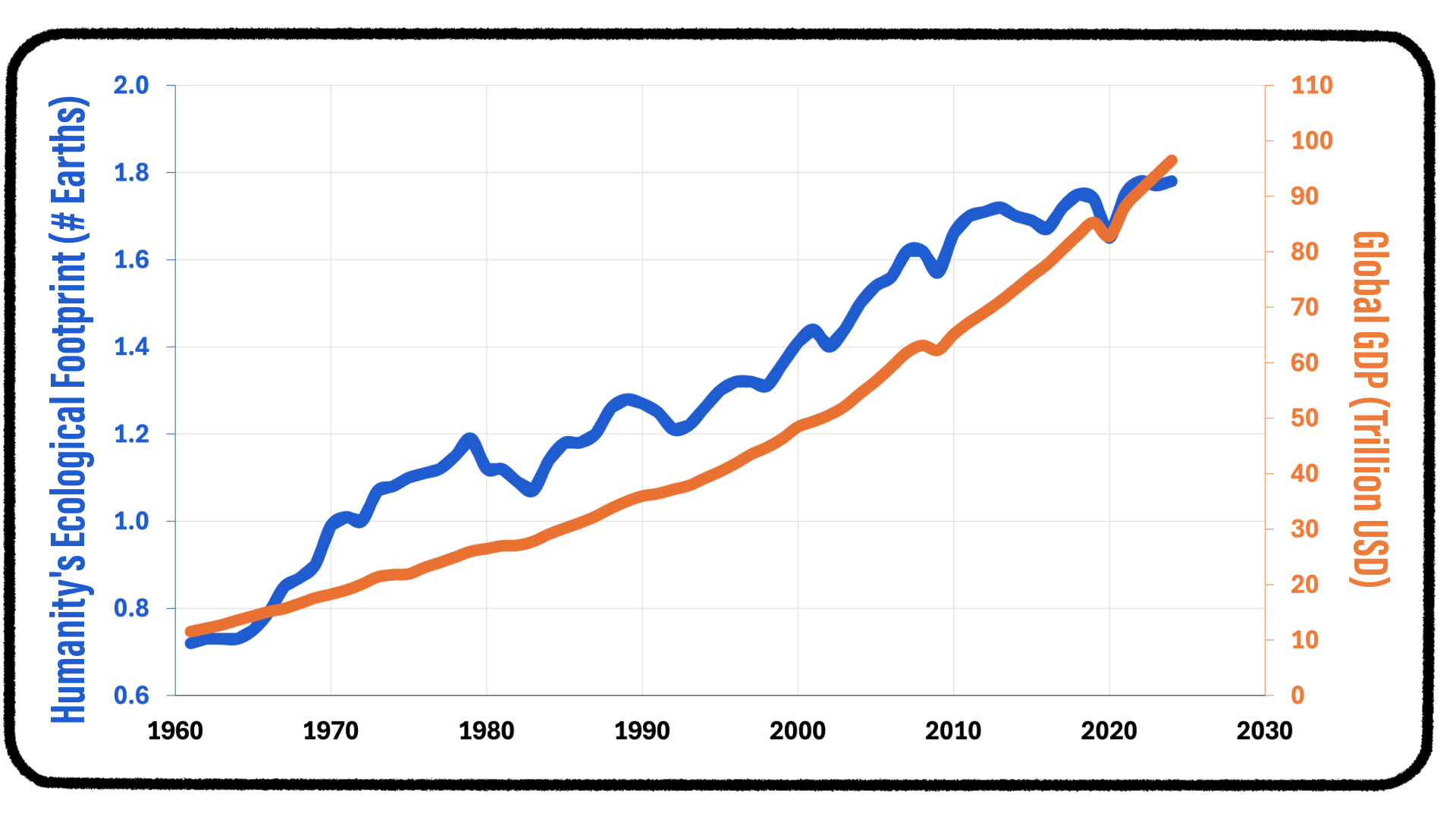
Figure 3: Positive correlation between global EF and GDP. Data sources: EF [20], GDP[21].
Ecological footprint (EF) measures total demand for Earth’s biological capacity to regenerate, from fishing grounds and crop, grazing, and forest lands to carbon sinks for maintaining a stable climate. The global EF can be expressed as a comparison between economic demand for biocapacity and the Earth’s total biocapacity regenerated on an annual basis. This ratio equates to the total number of Earths that would be required to sustain economic activity in the long-run [27].
The sustainability formula should focus attention on the richest in society, since this is where historic and current responsibility for ecological overshoot resides. Such a focus could bring more attention to their unfair and outsized power over the fate of Planet Earth, rather than on their spending decisions. It would also avoid a tendency among sustainability advocates to highlight only lower limits of consumption as the sustainability problem of concern. While it is critical to remember that some part of the global population lives at or below the threshold of what is necessary for wellbeing, it is equally important to highlight the fact that so many are committed to living far beyond the material requirements for a good life.
The low material throughput of under-resourced communities is often used to justify ever more economic activity, even as the global economic system concentrates value at the other end of the spectrum. For every new unit of GDP generated, 53% of that value accumulates among the top 10% of global income earners [12]. Ignoring this dynamic creates a dangerous deception that paints economic growth as good, even potentially green, while fortifying inequality and driving new ecological impacts [22], [23]. Like a highway patrol that enforces only minimum speeds, it creates the illusion of safety and responsible authority, while an increasingly dangerous situation is created by a few high-velocity drivers.
A focus on the rich can also move us past national political boundaries, which each contain a great variety of socioeconomic situations. After all, while the US is home to 40% of the world’s millionaires, the other 60% are spread across every continent, especially Europe and Asia [24]. The wealthiest ten percent are a global population that will need to cut back on consumption and possession, updating expectations of investment growth, and contributing actively to downscaling. Achieving a greater balance of wealth and ownership across the world is an essential step in transitioning to a collective One-Earth Footprint (Figure 4).
At the same time, “the rich” are not a static group of people – there is a degree of economic mobility across generations and across individual lifetimes [26]. And, like the vast network of economic linkages that redeploys the savings, much of the global population is connected through spending, employment, and investment. Many people who are barely getting by are employed in sectors sustained by economic growth and have their plans for old-age invested in the same [27]. This is why degrowth advocates call for economic transformation, not simple contraction, which is blind to inequality and historical injustice. Degrowth requires a systematic transition of the economy that redistributes wealth and power, and increases opportunities for all people to live well and within a fair-share ecological footprint [28].
The responsibility for this transformation, then, rests with all of us, in different ways and to different extents. Downscaling is for some, but moving away from the commitment to endless growth is for all. Indeed, there are already communities across the globe who are living well without growth and in balance with ecology [29]. Likewise, there are long-standing movements and cultures attuned to resisting the lure of economic expansion [30]. As we aim to kickstart a globe-spanning transition to a smaller economy, it is important to recognize that there are many varieties of the challenge to endless growth to learn from and build into a larger movement.
By updating our thinking around who are the actors of change, where the opportunities to act lie, and what problem we are collectively facing, we open new imagination space for the how. Into this space, the degrowth movement emerges.
Onward to How
The prevailing how of sustainability – dominated by carbon concern, efficiency updates, and a focus on raising consumption without upper limits – is not actually sustainable because it does not confront the growth dynamics that a) ensure the savings are not saved, and b) concentrate wealth into fewer and fewer hands. The lesson from this reality is that rushing to implementation, without first establishing a more globe-spanning empathy with the problem at hand, can be reckless.
Treating the what, where, and who with deep concern can help build the kind of shared understanding required to enable a challenge to endless growth to emerge in every sector, from global finance and international diplomacy to research laboratories and community gardens. While some politicians are already running for office on platforms that highlight global ecological issues and wealth inequality, rarely do the two messages come together to challenge the rule of growth as an imperative. Breaking through this rule on a significant scale will require a wider movement to develop growth-challenging language, techniques, and political resolve.
It may seem that we are running out of time to empathize. Planetary boundaries are being breached at an ever-faster pace and the Earth Overshoot clock has run into overtime [31]. But “the expanding economy does not crash into ecological limits as a car crashes into a wall” [32]. The crashing is already in progress, slow and disproportionately felt across habitats, societies, and economic segments.
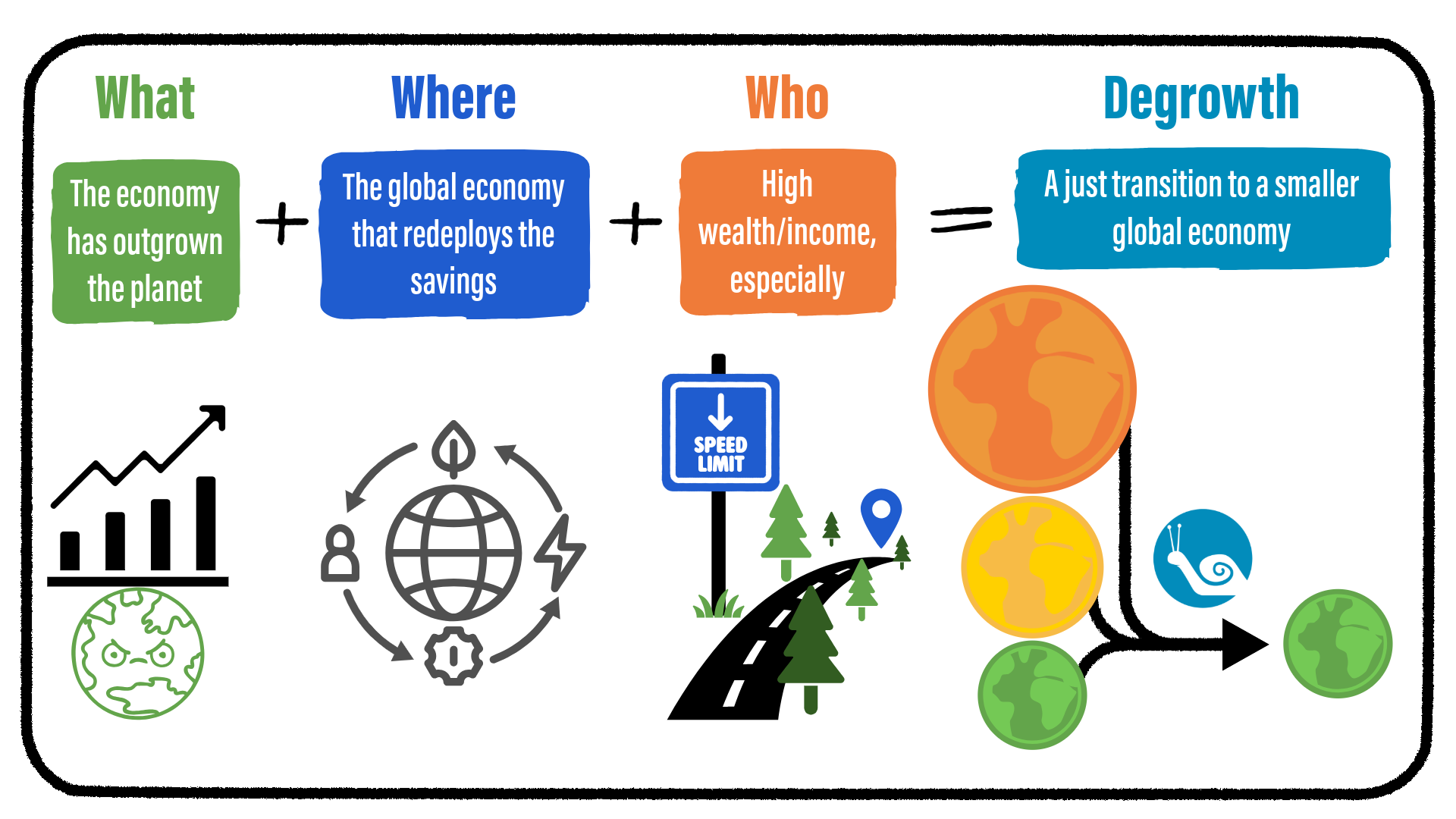
Figure 5: How a new sustainability formula points toward degrowth
Because the process is slow, we have the chance to avoid some aspects of disaster even as we face others. Yet, disaster does not produce lasting social and economic transformation on its own. The job at hand is to design our disaster response: delinking and relinking parts of the economy, shrinking some activities and growing others, reconnecting with ecological knowledge and pursuing new discoveries. An effective response requires both urgency and careful deliberation; it cannot be done by simply thrusting down on the brakes.
With this brief, we have introduced some key factors to consider in assessing the problem and evaluating opportunities for action. We call for more empathizing and a new sustainability formula (Figure 5). Using this formula, the ideation, prototyping, and testing are already underway. There is also significant discourse emerging about how to enact intentional downscaling and how to thrive together within a smaller economy. Under the banners of post-growth and degrowth, sustainability is being reclaimed, stimulating a lively search for more equitable forms of resource provisioning and ecological-economic relationships.
References
Achakulwisut, P. et al. It’s time to move beyond ‘carbon tunnel vision’. Stockholm Environment Institute (2022).
Mulrow, J. et al. Has the Economy Outgrown the Planet? Degrowth Institute (2025).
Mulrow, J. et al. What Happens to the Savings? Degrowth Institute. (2025).
Rooper, H. Emissions Growth in the Developing World. Climate Leadership Council (2024).
Levitz, E. Abundance book review. Vox (2025).
Zhao, N. The Nation’s Stock of Second Homes. Eye On Housing - National Association of Home Builders Economic Research Blog (2024).
Krugman, P. & Wells, R. Economics. (Worth Publishers, 2018).
Deffeyes, K. S. Hubbert’s Peak: The Impending World Oil Shortage - New Edition. (Princeton University Press, 2009).
Ehrlich, P. R. & Ehrlich, A. H. The Population Bomb Revisited. Electron. J. Sustain. Dev. 3, (2009).
Kolbert, E. The Sixth Extinction: An Unnatural History. (Henry Holt and Co., 2015).
Meadows, D. et al. Limits to Growth: The 30-Year Update. (Chelsea Green, 2004).
Gómez-Carrera, R. et al. World Inequality Report 2026. World Inequality Lab (2025).
CME Group. Commodities: The World’s Benchmark Commodity Products, All in One Place. CME Group (2026).
Food and Agriculture Organization of the United Nations (FAO). Forestry Production and Trade. FAOSTAT (2025).
FAO Food Balances. Cereals allocated to food, animal feed and fuel. Our World in Data (2025).
Mulrow, J. & Derrible, S. Is slower more sustainable? The role of speed in achieving environmental goals. Sustain. Cities Soc. 57, 102030 (2020).
Richtel, M. ‘We’re All Water-Bottle Freaks’. The New York Times (2023).
U.S. Water Supply and Distribution Factsheet. Center for Sustainable Systems, University Michigan (2025).
Zehner, O. Green Illusions: The Dirty Secrets of Clean Energy and the Future of Environmentalism. (University of Nebraska Press, 2012).
National Ecological Footprint and Biocapacity Accounts. Ecological Footprint Initiative (2025).
World Bank. GDP (constant 2015 US$). DataBank (2025).
Kumar, A. COP26: What real climate action would look like. Greenpeace India (2021).
Sylla, N. The Fair Trade Scandal: Marketing Poverty to Benefit the Rich. (Pluto Press, 2014).
Millionaires by Country 2026. World Population Review (2026).
Shorrocks, A. et al. Global Wealth Report 2023. UBS (2023).
Mazumder, B. Intergenerational Economic Mobility in the United States. Federal Reserve Bank of Chicago (2022).
Linn, A. et al. A Path to Post-Growth Pensions. Arketa Institute for Post-Growth Finance (2026).
Vale, B. & Vale, R. J. D. Living within a Fair Share Ecological Footprint. (Routledge, 2013).
Kothari, A. et al. Buen Vivir, Degrowth and Ecological Swaraj: Alternatives to sustainable development and the Green Economy. Development 57, 362–375 (2014).
Latouche, S. Les précurseurs de la décroissance: une anthologie. (le Passager clandestin, 2016).
Earth Overshoot Day. Global Footprint Network (2025).
Wackernagel, M. & Rees, W. E. Our Ecological Footprint: Reducing Human Impact on the Earth. (New Society Publishers, 1996).

Degrowth Institute, Chicago, IL
Corresponding Author: John Mulrow, john@degrowthinstitute.org
Editing and Design: Anna Prouty
Contributors: Jason Barahona Rosales, Otis Pitney and Anna Prouty, with input from DGI partners and advisors (see www.degrowthinstitute.org/about)
Degrowth Institute is a 501(c)(3) nonprofit organization.
© May 2026 by Degrowth Institute is licensed under CC BY-SA 4.0


