

What Happens to the Savings?
“Go Green, Save Green.” It’s a common refrain that has emerged from the evolution of sustainability over the past several decades. We “go green” by reducing resource demands and hence environmental impact. Then, by not having to pay for those saved resources, we also save dollars. The promise of sustainability tends to stop right there, leaving out an important follow-on question:
What happens to the savings?
If the savings are not conserved or protected, then they are available to be re-spent. Furthermore, the entire economy has been set up around a growth imperative, a long-held commitment to continual economic expansion. This means all the ecological savings from “going green” are continually at risk of being redeployed somewhere else in the global economy, furthering planetary impacts. To resist this tendency, the degrowth movement has come together to challenge endless economic growth.
This brief examines how the savings from sustainability efforts are consistently re-allocated to further growth rather than environmental stewardship, with examples and data from the real economy, past and present. We propose that a challenge to endless economic growth must be sustainability’s next evolution, and we provide some ideas for you to support this shift through action in your own work. By investigating what happens to the savings, adding macroeconomic context to environmental claims, and prioritizing equity over efficiency you can help advance the movement for a more just and ecological economy within planetary limits.
20 Pages, or prints as a booklet on 5 sheets of paper.
Challenge to Growth Series
What Happens to the Savings? is the second volume in our Challenge to Growth (C2G) series of briefs. Through this series, we provide summaries of current thinking and relevant data concerning limits to global economic growth. We point to opportunities for ushering in a more just and ecological economy; one that seeks appropriate growth in some areas, but which is smaller at a global scale. The C2G briefs are open access, with printable versions and graphics downloadable from our website. They are also filled with citations, so that you can dive deeper into the great variety of literature that challenges endless economic growth. For more C2G content, check out:
1. Evolution
The expansion and evolution of “sustainability” has been ongoing since the term entered global political dialogue, about forty years ago [1]. Its core logic, however, remains: Save Money, Save the Planet. With the right technologies, the story goes, we can meet our needs with less, saving energy, material, and financial resources all at the same time. We can provide more for those who don’t have enough, and we can halt ecological crises like climate change.
Based on this logic, ideas of human development and dreams of saving the planet come together to form the sustainability promise. It’s a promise that has inspired visions of a better future and originated concepts like clean energy, the circular economy, and green growth.
Taking stock of progress, we observe that technology is advancing as promised. Everything from vehicles, home appliances, and communication devices to manufacturing and farm irrigation has become more efficient. We’ve also grown more committed to environmental causes, changing our consumption choices, setting up green committees, and founding departments and schools of sustainability. Significant and well-meaning action has been launched in the name of sustainability the world over, and real changes have been made in shifting what and how we consume.
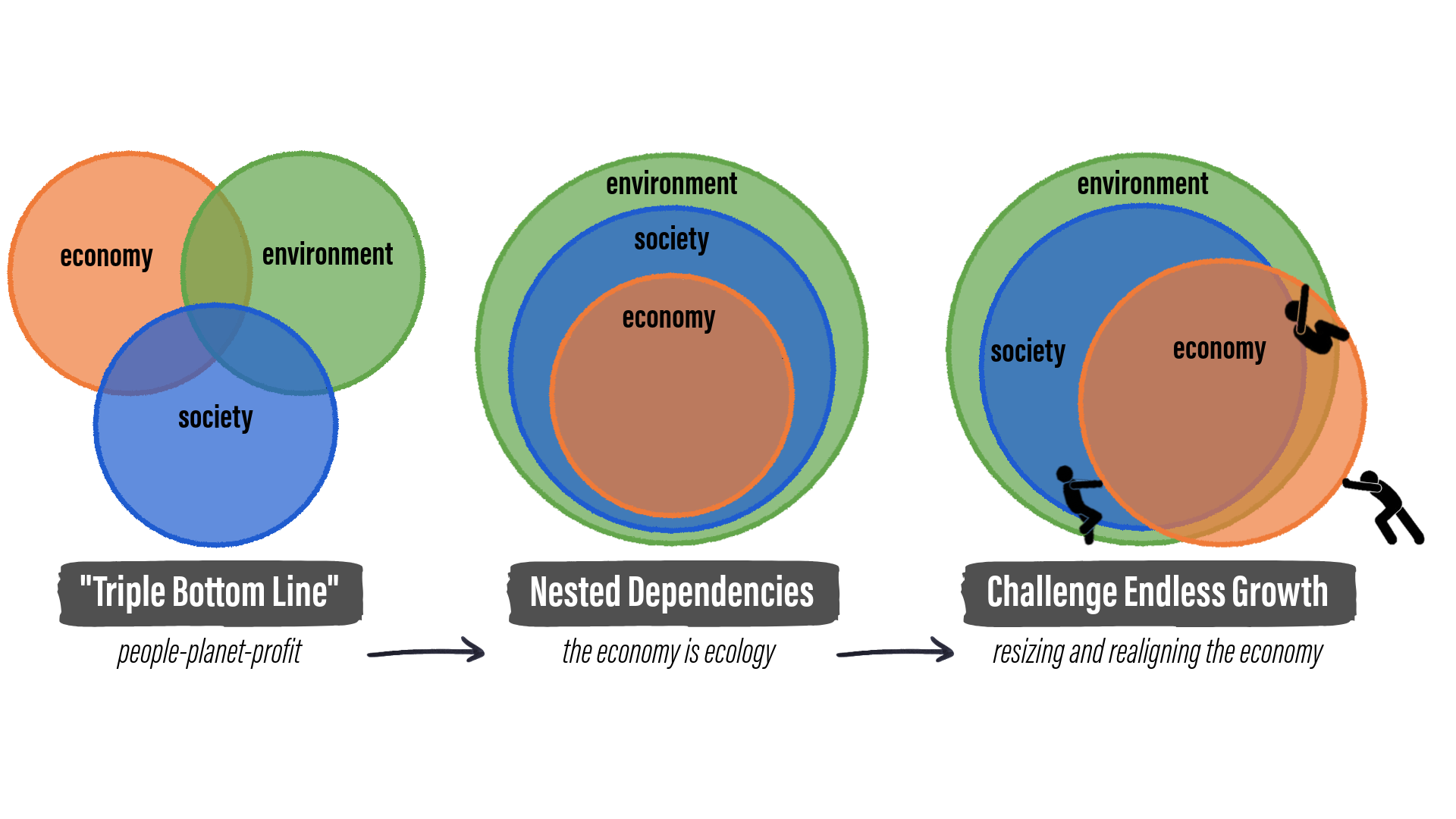
Figure 1. Sustainability’s Next Evolution [4]
The results, however, do not add up to a promise fulfilled. The health of the planet continues to worsen, with symptoms like climate change, biodiversity loss, and land conversion heading in the wrong direction [2]. Likewise, the global economy is not more just or equitable; the ecological footprints of the world’s wealthiest continue to rise, drastically out of proportion with the rest of humanity [3].
This mismatch of intentions and outcomes arises from the problem of what happens to the savings from all our well-meant sustainability efforts. Those savings represent a potential reduction in demand for more of Earth’s ecological capacity, but there is no system in place for keeping the savings saved. Quite to the contrary, the economy runs on a commitment to endless growth, a dynamic which requires the savings to be continually redeployed to serve economic expansion. It’s how electricity demand, saved through more efficient light bulbs, gets re-allocated to data centers, and it’s why more efficient engines lead to bigger cars, not lower emissions. As long as the economy keeps growing, ecological degradation keeps increasing.
Repairing the sustainability promise requires adding economic limits to its principles of ecological and social justice. We’ll need to challenge endless growth so that the economy can be right-sized, within planetary limits, and re-aligned with social priorities (Figure 1). Otherwise, we’ll continue circling back to the same disappointing results, year after year.
Bringing macroeconomic context to the sustainability promise is a necessary evolution, but it is far from inevitable since the commitment to infinite growth is so deeply entrenched. Still, the growth imperative is not a natural law; rather, it is a dynamic of the human economy that can be controlled, tuned, and updated to fit with present reality. In the name of true sustainability, we can choose to keep the savings saved, for good.
2. Promised Savings
To demonstrate how macroeconomic forces affect the savings, let’s trace the recent history of a few objects well-known to the sustainability world: light bulbs, paper, and cars.
Light Bulbs
Indoor lighting has been getting more efficient for thousands of years, extending from ancient advances in torch technology to the light-emitting diode (LED) bulbs popular today [5]. Often, these advances brought benefits for environmental health. In the eighteenth century, for example, whale oil lamps were celebrated as a cleaner and more efficient alternative to tallow candles. Yet, the enthusiasm for whale oil soon fueled a global hunt that drove several whale species to the brink of extinction [6].
Such planetary-scale tradeoffs were far from people’s minds at the time, as they were for the early petroleum marketers who boasted that kerosene was cleaner and more efficient than whale oil.
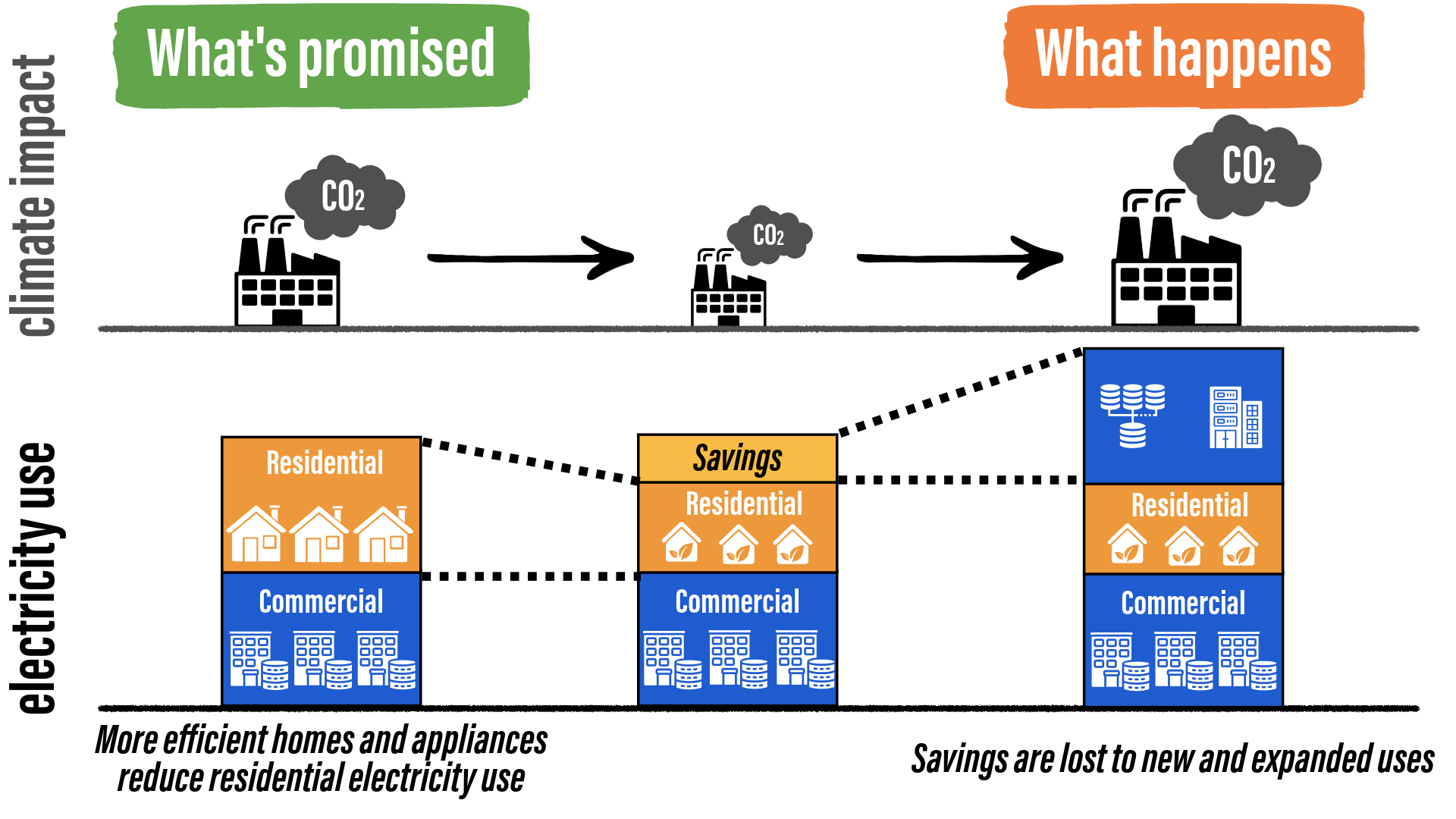
Figure 2. Changing Lights, Losing the Savings
This pattern repeats over and over, through campaigns for Edison bulbs and fluorescent tubes, all the way to today. In this age, however, we cannot ignore the limits of global ecology. Nevertheless, even as the planet’s climate degrades and many species of whale remain endangered, environmental leaders assure us that more efficient bulbs will light a path toward climate stability.
The US Environmental Protection Agency launched a campaign in 2003 titled “Change a Light, Change the World,” promoting the potential of more efficient light bulbs to reduce energy demand, and therefore, reduce emissions [7]. As recently as 2022, climate leaders like Gina McCarthy were tweeting that light bulb efficiency standards would “save $3 billion a year” and “cut carbon emission by 222 million tons” [8]. Such claims have put the sustainability promise on public display, backed by credible scientists and prominent government officials.
But there’s data that points to what actually happens to the energy saved from changing our light bulbs. According to the Energy Information Administration, electricity sales have grown by about 50 billion kilowatt-hours (kWh) in the few years since Ms. McCarthy’s announcement, a growth rate similar to that of the 1990s economic boom [9]. You can probably guess where this renewed growth of electricity demand is coming from. It’s not households; it’s data centers. So, while more efficient bulbs and appliances may have kept residential energy demand from growing, those savings are all being rapidly redeployed for commercial purposes.
The loss of savings from energy efficiency is not a fluke or an exceptional case; it’s how our economy works. Consider the situation from the standpoint of an electricity generation facility. A power plant is planned, financed, and built with an expectation of total electricity output over its lifetime, and it operates with the aim of meeting that expectation. It’s like a balloon that must be kept inflated. If some air is let out, new air has to be pumped in. And if one sector of the economy needs less electricity thanks to efficiency improvement, another sector steps in to fill the demand (Figure 2).
In today’s electricity markets, there is always some entity – such as a data center – ready and willing to consume freed up units of electricity [10]. That’s just one example of a much larger economic principle: savings in one part of the economy are not conserved but are redeployed elsewhere to facilitate the growth of the whole. This is true even for those savings that are environmentally motivated. It’s a principle that operates for all economic sectors and across every link in the globe-spanning network of material, energy, and economic flows.
Paper
If you were working in sustainability in the 2000s, you probably remember putting this message in your email signature: “Please consider the environment before printing.” It was composed in green font and accompanied by a tree or leaf symbol, implying that this action of not printing would result in some benefit for the forests of the world. As thinkbeforeprinting.org, a website dedicated to the email signature campaign, boldly declares, “Save trees, save paper” [11]. Transmitting a message via electronic circuits is certainly less impactful than with ink and paper, a fact that has driven great interest in the resource-saving potential of the internet [12]. That potential, however, is only partially realized.
Starting in about 2005, the global market for graphic paper (newsprint, notepads, and printer paper) began to shrink for the first time in recent history [13]. Meanwhile, the market for paper-based packaging (cardboard boxes) began to expand, ultimately offsetting the decrease in graphic paper.

Figure 3. Saving Paper, Not Trees
It may not come as a surprise to note that 2005 was also the year Amazon.com launched Prime, a subscription service offering expedited shipping on all orders made through the online shopping platform. The trees that once arrived in mailboxes as letters and envelopes were now arriving on doorsteps as boxes and filler paper.
The internet was great at reducing stacks of office paper and it also excelled at facilitating commerce, opening a new valve for the flow of trees from forest to factory. Without downward pressure on the overall demand for paper products of any kind, the paper producers – like the electricity producers in our previous example – found other buyers for their wares (Figure 3).
Cars
As light bulbs keep getting more efficient, so too have cars and vehicles of all kinds. Though humans have been working for centuries to get more miles out of less fuel, such work is now widely recognized as part of the modern sustainability agenda. Since the 1990s, prominent environmental organizations such as the Rocky Mountain Institute have called for the development of “ultralight, hybrid-electric, and superefficient” vehicles that would usher in an age of cheaper travel and lower emissions for the transportation sector [14].
One problem with this idea lies in how product designs evolve in response to new technological capabilities. Engineers and innovators take advantage of such improvements to make their products do more, continuallyratcheting up the levels of service we consider normal [15]. Imagine the driver of a Ford Model T (released in 1908) sent a hundred years into the future and put behind the wheel of an F-150 pickup truck, the most popular car in the US today. They would certainly find the engine to be “superefficient” and the aluminum body to be “ultralight” but might be surprised to find that the fuel economy (miles per gallon) has barely changed [16]. All that efficiency has been used to make cars larger, faster, and more convenient to drive, not more ecologically responsible [17].

Figure 4. Fuel Savings, Redeployed
Even if all cars were to go fully electric and renewably powered, eliminating their need for fuel altogether, the potential savings could still be exploited for new and expanded uses. The fuel producers, like paper producers and electricity generators, would find other customers for their product. In fact, we are already seeing this shift in action. As sales of gasoline (for cars) have slowed in recent years, three other fuel categories are taking up the slack for fossil fuel companies, namely diesel (for trucking), shipping fuel, and jet fuel [18]. The overall effect has been increased energy consumption. According to the International Energy Agency, “the latest data show that the world’s appetite for energy rose at a faster-than-average pace in 2024” with energy-related carbon dioxide emissions “hitting an all-time high” [19]. Though the hard-earned improvements in car technology could be credited with lowering gasoline consumption, the results do not add up to impact reduction on a global scale, the only scale that matters for planetary indicators like climate change (Figure 4).
The whole economy acts as a transmission network, allocating and re-allocating the flow of ecologically derived resources across sectors, for new and expanded uses. In an ever-growing economy, resource savings in one place are redeployed to serve growth somewhere else.
Though sustainability advocates act on solid science and with good intentions, lack of attention to macroeconomic context has kept us from confronting economic growth as a primary determinant of planetary health.
3. Growth Imperative
Commitment to GDP Growth
The savings from efficiency do not enable growth on their own. It’s the overall economy’s commitment to endless growth – the growth imperative – that leads the savings from efficiency to be lost. The growth imperative is both a political requirement and social commitment aimed at enlarging a single indicator of success: the Gross Domestic Product (GDP), a measure of an economy’s total production of goods and services. The GDP is a reliable metric for tracking quantity of economic activity, even if it fails to capture quality aspects of an economy such as wellbeing, social cohesion, and ecological health [20,21]. Nevertheless, the GDP is a popular metric because it correlates with many things we associate with those qualities: household income, employment, new housing, and even funding for environmental protection [22,23].
Through this association, GDP growth has become an explicit goal of governments all around the world, often stated without reference to any quality indicators. All seven countries with the highest GDP per capita have official government statements that place “economic growth” among the countries’ core aims [24]. Some have qualified this pursuit with co-priorities such as supporting immigration or bringing environmental impact within planetary boundaries, but none veer from the path of endless economic growth (Figure 5).
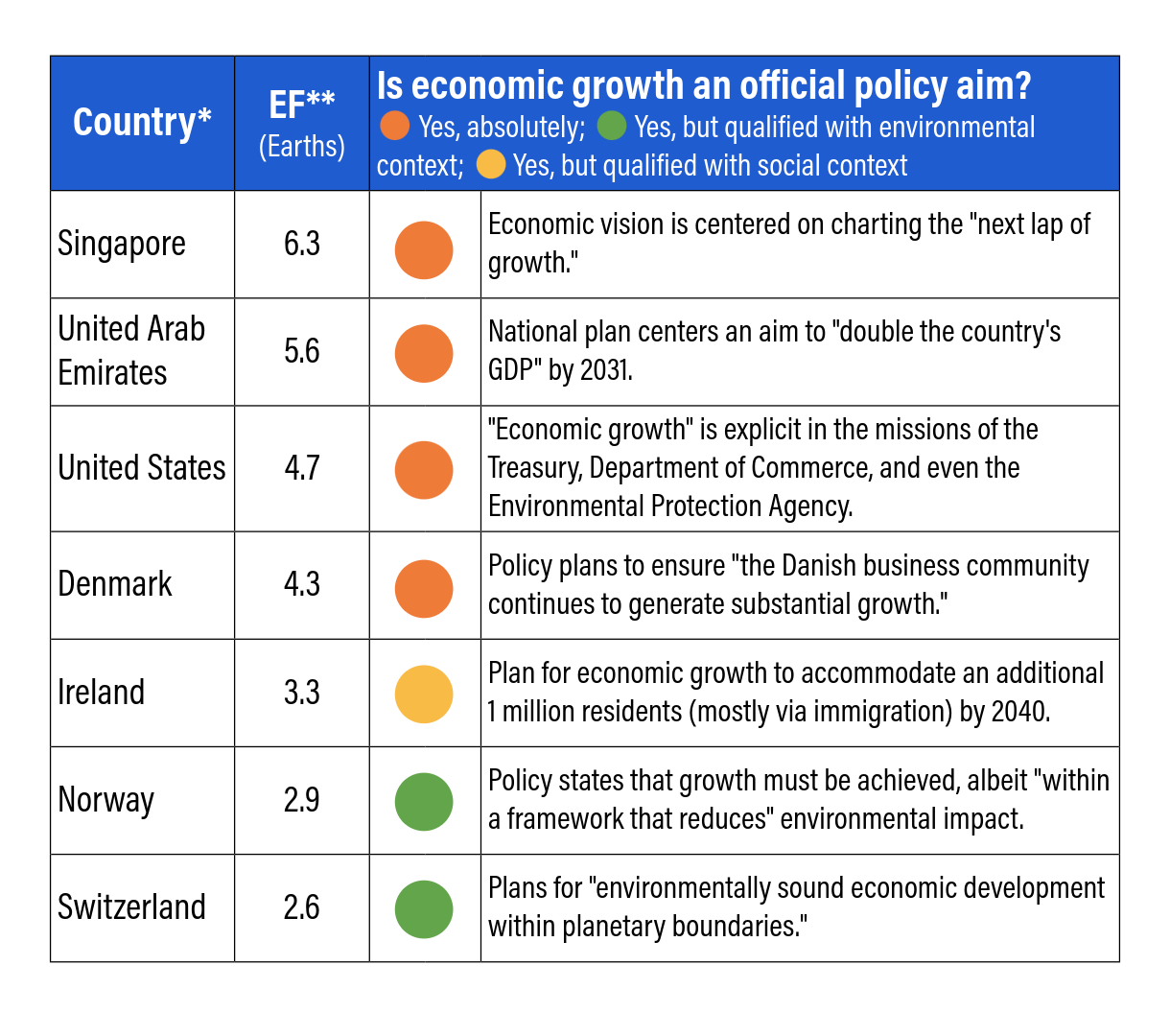
Figure 5. Commitment to endless growth, enshrined in national policy (adapted from Underwood, 2024 [24])
*Top seven countries with the highest GDP per capita, among countries with population > 5 million.
**EF = Ecological Footprint, a measure of biologically productive land and water area needed to supply a population’s resource demands and absorb its waste. Expressed in “Earths” to show how many planets would be required if all humans lived at that level of consumption [25].
No Decoupling: The Economy Is Ecology
A global and ecological look at what happens to the savings also requires viewing the economy beyond climate, carbon emissions, and fossil fuels. Remember that multiple planetary systems are threatened by the relentless expansion of the economy. Every bit of economic activity claims ecological resources to provide a given good or service [29]. The economy is ecology.
Every aspect of Planet Earth, from the power of the wind to the life of the soil, has the potential to become a unit of GDP, and every unit of GDP represents ecological inputs. It follows that any reduction in ecological impact represents a sacrifice of economic opportunity. The growth imperative requires that this sacrifice be made up for by encroaching on some other ecological category. This “squeezed balloon effect” is why, even if we were to deploy low-carbon technologies and enact climate regulations at scale, the costs of transition would weigh heavily on other (non-climate) planetary systems (Figure 6).
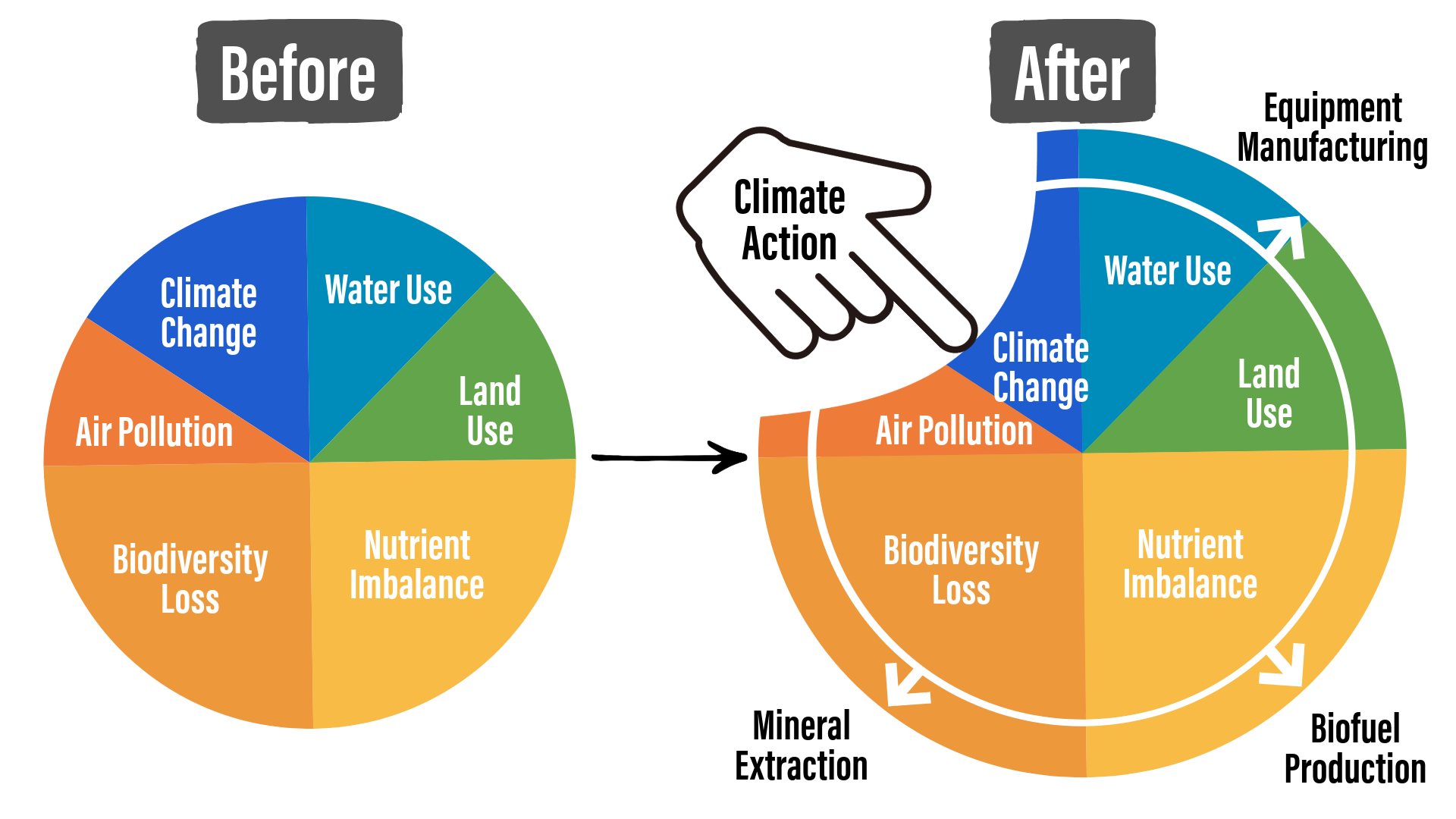
Figure 6. Example of the Squeezed Balloon Effect for Climate Action
Energy Addition, Not Transition
When a group of ecological economists analyzed the drivers of US climate impact from 1990 to 2019, they examined how factors such as energy efficiency, the carbon intensity of the energy mix, and overall economic activity influenced greenhouse gas emissions [26]. Although improvements in efficiency and cleaner energy sources helped reduce emissions, continued economic growth counteracted their effects, ensuring only a fraction of the potential savings was actually realized. There’s some real hope in this finding: the hard work of climate advocates and sustainability professionals still pays off. Even with backpressure from economic growth, total US carbon emissions peaked in 2007 and have steadily decreased since then [27].
Unfortunately, this trend does not carry over to the scale of the global economy, which we must remember is the only scale that matters for planetary health. At this scale too, there has been great progress in expanding renewable energy, energy efficiency, and electrification. Together, these improvements form what has been termed an energy transition, implying that fossil fuel energy is being replaced by non-fossil fueled systems. And yet again, the growth imperative has ensured that the potential savings are not fully realized. Fossil fuel use has yet to be displaced or erased by the rise of alternative energy. Instead, the economy’s total energy use is rising, with new alternatives being added on top of the carbon-intensive status quo. One comprehensive study of global energy consumption over the past two centuries claims that “addition” is a more appropriate term than “transition” to describe what’s actually happening [28]. The good intentions of both resource saving and energy transition are continually outdone by the growth imperative.
In viewing the energy transition, as currently defined, we are already seeing the ecological results of climate technology deployment: in the conversion of rainforest and protected areas into mineral extraction zones [30], in the rising demand for fertilizer to grow feedstock for biofuels [31], and in the buy-up of land for green technology development [32].
In order to keep the whole impact balloon from expanding, we need to put a limit on the size of the economy. Because economic growth is the ultimate liquidator of the savings, the sustainability movement must challenge endless economic growth as an extension of all our hard work.
4. Degrowth
Criticism of and resistance to endless economic growth have a long history. From societies displaced by colonial expansion to workers questioning the concentration of profits in the hands of a few, the blind pursuit of growth has galvanized movements, creating a vast base of knowledge about the dangers of unfettered growth. Environmentalists have also challenged economic growth on biophysical grounds, pointing out that infinite growth on a finite planet is logically impossible. Many economists of the industrial era even assumed that the commitment to growth would end naturally, once some basic level of material wealth was secured for all humans. And today, those living with excessive wealth may question to what end it’s all for. We ask whether any net benefit is gained from one-click shopping, fast fashion, or the runaway expansion of AI. These are all challenges to the dominant social and political commitment to endless growth [33].
From this challenge emerges a proposal for collective, purposeful self-limitation, which confronts the reality of biophysical limits through ideas for living better together. This proposal is called degrowth.
Degrowth is an intentional downscaling of the global economy for the purpose of achieving ecological sustainability and social justice.
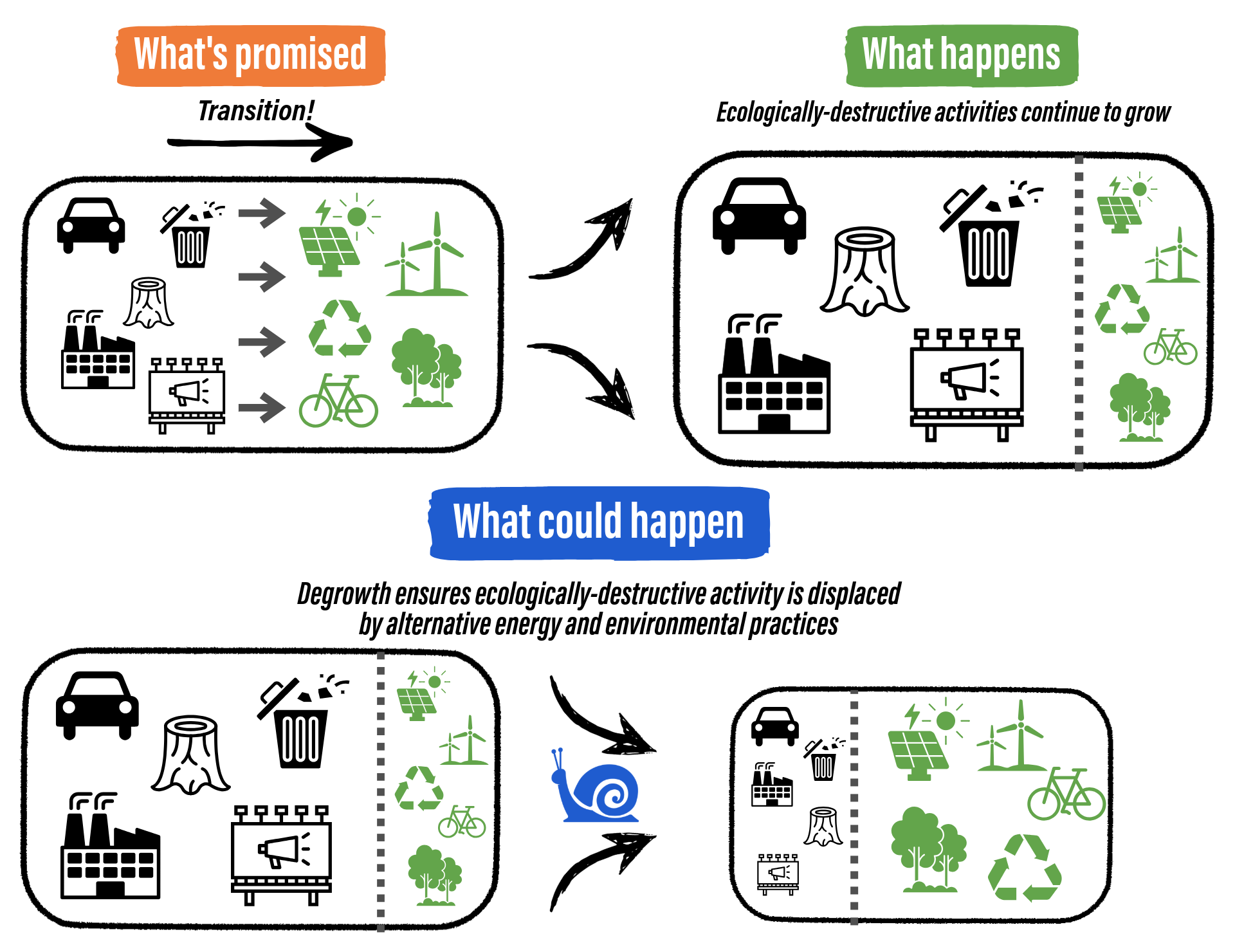
Figure 7. Degrowth: Transition with Economic Context
While challenges to endless growth have been made throughout time in different ways, degrowth speaks directly to a confluence of issues unique to this moment on Earth. Our economic system is causing ecological harm at a planetary scale, and control of this system is highly unequal. Our lives and landscapes are at risk, and any globe-spanning response will need to confront both social injustice and ecological harm. Instead of proposing austerity, aimed at temporary relief, degrowth seeks an update to economic power and purpose: a system capable of meeting everyone’s needs within a smaller economy.
Existing practices that prefigure degrowth include reducing working hours, scaling down harmful sectors, and providing universal access to necessities [34]. However, as long as the growth imperative remains firmly in place, such efforts will not achieve the necessary scale. Economic downscaling is the macroeconomic context required to ensure ecological practices actually displace destructive ones. By enacting a degrowth transition, we’ll ensure the savings are saved (Figure 7).
5. Action
Another common refrain in sustainability work is “Think Globally, Act Locally.” We use this mantra to bridge the gap between planetary systems we hope to affect – climate, oceans, biodiversity, etc. – and the limited spaces we occupy on a daily basis, physically and virtually. No single person controls the planet. We control our own consumption decisions, we influence family and friends, we organize in our communities, and we make planet-impacting decisions at work. Though we are constrained in our ability to determine what happens to the world, we can always affect the whole through well-meaning action that sends positive ripples outward.
What if those ripples are not reducing planetary impacts, but adding to them? Saving money and resources locally does not save the planet, since the growth imperative favors redeployment of the savings elsewhere. Knowing this, how can our actions be updated so that sustainability work carries not only positive intentions, but positive effects onto the global economic scene?
Every good sustainability pamphlet includes a list of things you can do, so here is our countdown of the top five, including examples of existing efforts for each:
1) Ask, what happens to the savings?
You can ask this question about your own work, or about environmental claims you come across. When the Amazon package on your doorstep reads, “This box is now made with less material… Scan to see why less material matters,” your savings-tracking synapses may now begin to fire. Then, when the bold claim of “4.2 million metric tons of packaging materials avoided” appears on your screen [35], think of the paper industry dynamics described earlier in this brief. Through packaging reduction, Amazon saves both financial and fuel resources for itself. Are those savings put towards forest stewardship or climate protection? The fact that this question goes unaddressed by their sustainability department should stand out as a glaring oversight.
When your green committee at work enacts a project to replace all the light bulbs with LEDs, what is done with the financial savings that will be realized on the company’s electric bill? Attempting to track the savings can initiate the kind of institutional action that links local to global, adding systemic shift on top of localized change. For example, some organizations have set up “green revolving funds”, which allow the savings from efficiency projects to be continually reinvested in other forms of environmental stewardship [36].
In considering the larger system of savings redeployment, local action can be motivated to engage beyond geographic boundaries, protecting the savings for the benefit of all. A coalition resisting the buildout of the Line 5 pipeline in Michigan and Wisconsin has demonstrated how to do this by pairing public demonstrations with advocacy for climate legislation at the state level [37]. Assuming the pipeline is not built, the coalition’s victory will extend beyond the areas physically threatened by pipeline construction. There will be legal infrastructure for reducing fossil fuel consumption generally, helping to protect communities everywhere against climate change. The locally won impact savings carry over to a larger scale.
3) Remember, the economy is ecology
“The economy is ecology” means that every bit of economic activity requires inputs from somewhere in the globe-spanning ecological system we call Earth. The Earth is both a vast store of material resources and a living entity, with energy and material flows driven by the Sun and sustained via landscapes and lifeforms. It is this metabolic rhythm that we tap into to run our economy.
Whether we’re turning iron ore into steel beams or converting food calories into thoughts and dreams, some bit of global ecology is required. This reality is why the global GDP cannot be decoupled from ecological impacts [40]. Claims to the contrary typically focus on a subset of the economy – a single nation or sector – which may indeed show GDP going up and impacts going down. But such claims always conceal some tradeoff being made outside the boundaries of analysis. Think of the squeezed balloon analogy. By focusing only on the section being squeezed, the ballon can appear to be shrinking. Meanwhile, some other section is expanding.
Promises of economic productivity without ecological cost ignore the biophysical underpinnings of the economy. A more honest approach is the concept of reciprocity: requiring every extractive action to be met with an equal and opposite sacrifice of economic opportunity. Indigenous ecologist Robin Wall Kimmerer refers to an “honorable harvest” in which some products of the land are taken, while others are deliberately left behind [41].
Though acts of reciprocity run counter to the growth imperative’s dictate to endlessly exploit economic opportunity, such traditions are still widely practiced in the form of mutual aid, relationality, and gift economies. As organizations like the Wellbeing Economy Alliance have asserted, “what some refer to as the New Economy, is the Knew Economy for others” [42]. There is already a wide base of knowledge for thriving beyond the growth imperative.
Remembering that “the economy is ecology” is a way to prompt critical thinking about the sustainability solutions we propose, develop, and advocate for. It is not an excuse to give up on sustainability’s good intentions; it is a guide for moving our sustainability work toward real reciprocity with the planet’s ecological system.
2) Add social and economic context
Not every environmental claim needs macroeconomic context. If closing down a coal-fired power plant reduces air pollution wafting through the surrounding neighborhoods, local environmental health claims stand on their own. However, when an initiative claims to have global benefit, a validity check is required. Attaching social and economic context to sustainability claims can provide the public with a more clear-eyed view of technology’s role in combatting crises such as climate change.
A recent survey of prominent green-leaf product logos looked into the supporting information behind these subtle claims, finding only one that provided some economic context for what happens to the savings [38]. In this case, a Honda dealer provides an honest answer about the fuel saving potential of ECON Mode, a vehicle setting that controls braking and acceleration for more fuel-efficient driving. In response to an FAQ about whether this feature actually saves fuel, Honda admits that “it’s hard to say… different people will adapt differently to the changes in performance caused by this driving mode” [39].
This example is far from challenging the growth imperative, but imagine if every eco-claim made the same admission – that outcomes are subject to social and economic adaptation. That could prompt a serious conversation about how the current economic system works against the intentions of so many green leafy products, from smart thermostats and plant-based plastics to paperless billing and driverless cars.
4) Emphasize equity over efficiency
Production and consumption have been getting more efficient and less wasteful for centuries, while impacts drive ever-upward. This trend means the problem of sustainability does not lie with technology, but rather with the total size of the economic pie. Just as important is how that pie is apportioned across global society [43]. It is both morally and socially untenable to have economic power, and thus control over ecological resources, so unevenly distributed. Any technological pathway forward will need to harmonize with a smaller, more justly distributed economy.
Emphasizing equity will be a challenge, since policymaking so often prioritizes “economic efficiency” over fairness and inclusion [44]. To confront this imbalance, environmental justice advocates have long been working to reorient sustainability around community resilience, participation, and self-determination [45,46]. For example, the Hoodwinked in the Hothouse project educates about climate justice and exposes flaws in the logic of high-tech approaches to climate change. Their primer on resisting false solutions to climate change provides a conceptual map for updating sustainability goals and prioritizing equity over efficiency [47]. They note that instead of facing planetary boundaries with industrial scale technofixes and investment opportunities, we could resist the need for endless growth altogether, getting to the root of the problem. Key transformations in this process would include replacing centralized approaches with place-based stewardship and democratic autonomy, and moving from a growth imperative to self-limitation based on reciprocity.
Since the economy is ecology, financial wealth is not only an indicator of purchasing power; it’s a measure of control over Earth’s ecology. Because the current economic system concentrates that control in the hands of a few, the prospect of economic contraction could be dangerous. It would mean protection for some and vulnerability for many. We’ll need to reverse that dynamic, transforming the economy so that ecological control is more equitably shared. Prioritizing equity ahead of efficiency will be a key tenet of that transition.
5) Advocate for degrowth
Degrowth is an intentional downscaling of the global economy for the purpose of achieving ecological sustainability and social justice. Enacting degrowth would entail shrinking wealthy societies’ use of materials and energy while prioritizing justice and wellbeing for all [48]. The concept has sparked political movements, fields of research, and a broad effort to educate and share ideas for living well within limits [49]. Many advocates see degrowth as a necessary extension of their existing sustainability work, adding a challenge to endless growth that environmental leaders have, so far, tended to overlook.
The movement proceeds with caution and care, since questioning the merits of economic growth is a risky endeavor – politically unfamiliar and socially taboo. Still, it is the challenge to growth, explicit in the term “degrowth”, that is attractive to so many people who are tired of following the latest eco-product claim or green buzzword toward broken promises. By pairing self-limitation with intentionality, justice, and ecological wisdom, degrowth stands apart from other limits-based proposals that have centered financial austerity and/or population control. Degrowth focuses on the totality of economic production and consumption. A limit on economic size is how we’ll open up ecological space for restoration and repair, and dislodging the growth imperative is how we’ll ensure the savings are actually saved.
6. Conclusion
Through this brief investigation of what happens to the savings, we do not claim to have revealed some grand hidden truth about how the world works. There is no single entity that perpetuates the false promise of sustainability, hiding Wizard of Oz-like behind a green curtain. Instead, we’ve shown examples of just how widely embedded the sustainability promise has become, how the growth imperative operates to liquidate the savings, and finally how we may begin to enact sustainability’s next evolution. We can choose to stop believing in the fantasy of endless growth and we can act to dislodge the growth imperative through social and political change.
We do not propose that degrowth holds all the answers. In fact, many proposals for degrowth policy also risk unintended consequences if enacted without a more globally-shared commitment to downscaling the economy [50]. Scrutinizing the savings and adding macroeconomic context is necessary for any effort making planetary-scale claims.
Since intentional and cooperative economic downscaling has never been done on a global scale, the path forward is largely unknown. However, unknown does not mean unknowable. Because the economy is ecology, we know there will need to be international cooperation to limit economic size for the sake of planetary health. A smaller economy will also need to be more justly and equitably shared among peoples of the world. Finally, moving beyond GDP as a marker of progress, we’ll need to pursue measures of wellbeing that are not so tightly coupled to ecological impact.
We’ll need people and organizations from the sustainability movement and beyond to challenge endless economic growth as an extension of their current work. This will prompt an outpouring of new ideas and an uplifting of old ones, aimed at living better within limits. We can choose to keep the savings saved, enacting a just and intentional degrowth transition, in the name of true sustainability.
How to Save the Savings
Ask what happens to them
Add social and economic context
Remember, the economy is ecology
Emphasize equity over efficiency
Advocate for degrowth
References
For those references that are available online, the publication year is hyperlinked:
[1] World Commission on Environment and Development. Our Common Future. (United Nations, 1987).
[2] Seven of nine planetary boundaries now breached. Stockholm Resilience Centre (2025).
[3] Hickel, J. The World’s Sustainable Development Goals Aren’t Sustainable. Foreign Policy (2020).
[4] Mulrow, J. Has the Economy Outgrown the Planet? Degrowth Institute (2025).
[5] Brox, J. Brilliant: The Evolution of Artificial Light. (Houghton Mifflin Harcourt, 2010).
[6] Mulrow, J. Please, Stop Considering the Environment. Resilience (2023).
[7] US EPA. EPA Urges Americans to ‘Change A Light, Change the World’ this Fall. Environmental Protection Agency (2003).
[8] McCarthy, G. @ginamccarthy46 Archived. X (formerly Twitter) (2022).
[9] US EIA. After more than a decade of little change, U.S. electricity consumption is rising again. Energy Information Administration (2025).
[10] Ramanan, A. Coal- and gas-fired power plants have a new best friend: data centers. Utility Dive (2025).
[11] Save trees, save paper. Thinkbeforeprinting.org (2009).
[12] Malmodin, J. et al. Greenhouse Gas Emissions and Operational Electricity Use in the ICT and Entertainment & Media Sectors. J. Ind. Ecol. 14, 770–790 (2010).
[13] Berg, P. & Linggvist, O. Pulp, paper, and packaging in the next decade: Transformational change. McKinsey & Company (2019).
[14] Lovins, A. Hypercars: The Next Industrial Revolution. Rocky Mountain Institute (1996).
[15] Shove, E. What is wrong with energy efficiency? Build. Res. Inf. 46, 779–789 (2018).
[16] Fressoz, J.-B. More and More and More: An All-Consuming History. (Penguin Books, 2025).
[17] Mulrow, J. & Derrible, S. Is slower more sustainable? The role of speed in achieving environmental goals. Sustain. Cities Soc. 57, 102030 (2020).
[18] US EIA. International Energy Outlook 2016 With Projections to 2040. Energy Information Administration (2016).
[19] Global Energy Review 2025. International Energy Agency (2025).
[20] Kubiszewski, I. et al. Beyond GDP: Measuring and achieving global genuine progress. Ecol. Econ. 93, 57–68 (2013).
[21] UN Development Programme. Human Development Index. United Nations (2023).
[22] Wen, Y. & Chen, M. Okun’s Law : A Meaningful Guide for Monetary Policy? Econ. Synop. (2012).
[23] Dasgupta, S. et al. Confronting the Environmental Kuznets Curve. J. Econ. Perspect. 16, 147–168 (2002).
[24] Underwood, A. The Economic Priority of the Seven Wealthiest Countries: More Wealth. Center for the Advancement of the Steady State Economy (2024).
[25] National Ecological Footprint and Biocapacity Accounts. Ecological Footprint Initiative https://footprint.info.yorku.ca/ (2025).
[26] Magazzino, C. et al. A decomposition and decoupling analysis for carbon dioxide emissions: evidence from OECD countries. Environ. Dev. Sustain. 26, 28539–28566 (2024).
[27] US EPA. Inventory of U.S. Greenhouse Gas Emissions and Sinks: 1990-2022. Environmental Protection Agency (2024).
[28] York, R. & Bell, S. E. Energy transitions or additions?: Why a transition from fossil fuels requires more than the growth of renewable energy. Energy Res. Soc. Sci. 51, 40–43 (2019).
[29] Czech, B. The trophic theory of money: Principles, corollaries, and policy implications. J. Proc. R. Soc. New South Wales 152, 66–81 (2019).
[30] Stanimirova, R. et al. Mining Is Increasingly Pushing into Critical Rainforests and Protected Areas. World Resources Institute (2024).
[31] Scafidi, A. & Leslie-Bole, H. Increased Biofuel Production in the US Midwest May Harm Farmers and the Climate. World Resources Institute (2025).
[32] Wolford, W. W. et al. Global land deals: what has been done, what has changed, and what’s next? J. Peasant Stud. 52, 1409–1446 (2025).
[33] Bliss, S. et al. Degrowth. in Vocabulary for Sustainable Consumption and Lifestyles: A Language for Our Common Future (Routledge, 2025).
[34] O’Dell, D. et al. Public support for degrowth policies and sufficiency behaviours in the United States: A discrete choice experiment. Ecol. Econ. 228, 108446 (2025).
[35] Packaging innovation. Amazon Sustainability (2025).
[36] Maley, J. How to set up a green revolving fund at your school. U.S. Green Building Council (2022).
[37] Enbridge’s Line 5 Pipeline. Native American Rights Fund (2025).
[38] LeFever, S. & Mulrow, J. Do eco-labels accurately convey environmental benefits? A critical assessment of corporate sustainability indexing methods. (2024).
[39] Honda ECON Button. Muller Honda Highland Park (2022).
[40] Haberl, H. et al. A systematic review of the evidence on decoupling of GDP, resource use and GHG emissions, part II: synthesizing the insights. Environ. Res. Lett. 15, 065003 (2020).
[41] Kimmerer, R. W. Braiding Sweetgrass: Indigenous Wisdom, Scientific Knowledge and the Teachings of Plants. (Milkweed Editions, 2013).
[42] WEAll. Māori Wellbeing Economies and Policy Guidance. Wellbeing Economy Alliance (2025).
[43] Degrowth: The Path From Consumerism To Survival. Climate Hour Podcast (2025).
[44] Berman, E. P. Thinking Like an Economist: How Efficiency Replaced Equality in U.S. Public Policy. (Princeton University Press, 2022).
[45] Delegates to the First National People of Color Environmental Leadership Summit. The Principles of Environmental Justice. (1991).
[46] Bullard, R. D. et al. Climate Crisis, Environmental Justice, and Racial Justice. in Necessary Conversations (ed. Plough, A. L.) (Oxford University Press, 2022).
[47] Dayaneni, G. et al. Introduction. in Hoodwinked in the Hothouse: Resist False Solutions to Climate Change (eds Amorelli, L. et al.) (2021).
[48] Reyes, E. What is Degrowth? Feminist Action Nexus for Economic and Climate Justice (2024).
[49] Prouty, A. DeSchool 2025 Event Report. Degrowth Institute (2025).
[50] Kallis, G. et al. Post-growth: the science of wellbeing within planetary boundaries. Lancet Planet. Health 9, e62–e78 (2025).

Degrowth Institute, Chicago, IL
Corresponding Author: John Mulrow, john@degrowthinstitute.org
Authors: John Mulrow, Hayden Dahmm, Jason Barahona Rosales, Anna Prouty Design: Anna Prouty
Degrowth Institute is a 501(c)(3) nonprofit organization.


